‘A 25-year-old created a line of best-selling lipsticks from her parent’s garden shed’ – starts an article in TeenVogue. All great inventor stories start from humble beginnings, but we only hear the stories of the winners like MDMFlow, not from the many more that failed or struggled to scale-up.
The need for better ways to help early-stage companies scale was highlighted in the recent UK Innovation Report, and it is has been a challenge for decades.
Florence (Flow) Adepoju is founder of the beauty brand MDMFlow, a premium beauty lifestyle brand inspired by Hip Hop culture. She revealed the challenges behind her fairytale story, at a recent event organised by Innovation Untapped.

Talking from experience she outlines how the industry ecosystem could gain benefit by supporting funders and create a golden bullet for scale-up.
Inspired by cosmetic marketing placement
Flow was always passionate about science and initially wanted to study pharmacy. However, as a teenager working at the Benefit Cosmetics counter, she was given the opportunity to see how the products were made and she realised that she could make the cosmetics herself.
She enrolled at the London College of Fashion (UAL) to pursue a Cosmetic Science degree. The course included a year in industry. It was while on a cosmetic marketing placement in Antwerp that she discovered a community of funder run businesses and met excellent formulators and raw material suppliers. These individuals later gave her invaluable advice and access to resources when she set up MDMFlow.
She applied for a start-up loan from UAL, and this helped her start the business after qualifying.
Understanding the customer
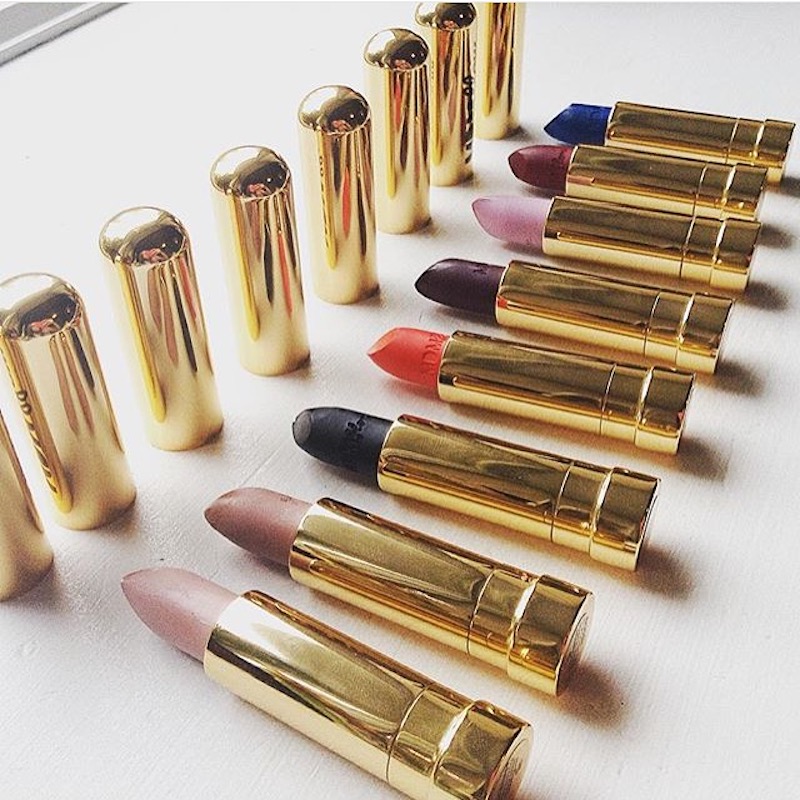
MDMFlow’s initial products were highly pigmented lipsticks in crazy colours that worked for all skin tones.
To differentiate them in the market, the packaging was designed to resemble a golden bullet. Flow chose aluminium, to make the lipstick cases cold to touch, and they closed with a satisfying snap. The colours were named after the songs that she listened to growing up, and that would be meaningful to the demographic she was targeting.
From shed to high street
When lab space was found to be unaffordable, Flow decided to convert her parent’s shed
She made small batches and sent them to journalists. The distinctive product and Flow’s authentic backstory quickly created interest in the media, with widespread coverage including British Vogue. The range launched in Boots and Anthropology and is featured on popular websites such as Pretty Little Thing.
A true rags to riches story – however Flow cautions that in reality she faced many challenges in building the business.
Three main challenges
MDMFlow was a runaway success, but it was impacted by the pandemic. People stopped going out and wore less make-up as a result. Sales of lipstick were particularly hit by the need to wear masks that covered the mouth.
Challenges included:
- Scale-up and manufacturing – to transition from making her own small batches to full scale manufacturing involved working with contractors who were more familiar with working with established businesses and bigger quantities. Flow found that they had fixed ways of working and that quotes expired before she was able to qualify the order quantities.
- Working with retailers – initially Flow found it difficult to negotiate with the large retailers, who often wanted exclusive access to her products. Also, the order quantities changed rapidly, and she risked over ordering on products that didn’t shift.
- Protecting IP – MDMFlow was a disrupter in the industry, but as the brand became successful, Flow became aware that major high-street retailers were attempting to emulate her products.
Sources of support
Flow stresses that it is not always more funding that founders required and that other forms of support are needed.
- Accelerator programmes – Flow found these helpful but often they assumed the founders needed support with financial information and investment, and she didn’t require capital. However, the programmes did offer a way to access the support she needed to develop the process.
- Unilever Ventures – Unilever has unrivalled expertise in the consumer goods industry from factory to end-user. Through Unilever Ventures she was able to answer questions and provide knowledge of best practice. It was through this experience that Flow realised it was possible to negotiate with retailers
- Samples – the quantities of pigments that MDMFlow required in the early days were much smaller than the minimums set by the suppliers. Fortunately, a number of companies made acceptations for Flow and being able to experiment with quality products greatly helped the business grow.
- People – Flow was fortunate to find mentors with the willingness to share their experiences and knowledge.
Call to action – a golden bullet for scale-up
Flow believes that while there is much that the industry can do to support early-stage businesses, she also observes that founders have real-time consumer information and could provide an important role in keeping incumbents customer-facing.
She points out that although the media likes to credit founders with innovation, that they lack the resources for breakthrough innovation and that mutual benefit can be achieved by creating an ecosystem.
Founders have fresh perspectives and knowledge of the market and trends, established companies have the networks, knowledge, and technology.

She recommends the following to overcome the obstacles in scale-up
- Develop more practical mentorships – these create a channel for sharing knowledge on compliance, tactics for negotiation and market experience.
- Share technology with start-ups – creating access to equipment and expertise can reduce the costs for founders and enable them to scale more quickly.
- Create formal partnerships – these enable collaboration and knowledge sharing, bringing together the complementary strengths.
Exchange of value can drive growth and create better outcomes, she concludes.
Useful links
Teenvogue story about MDMFlow origins
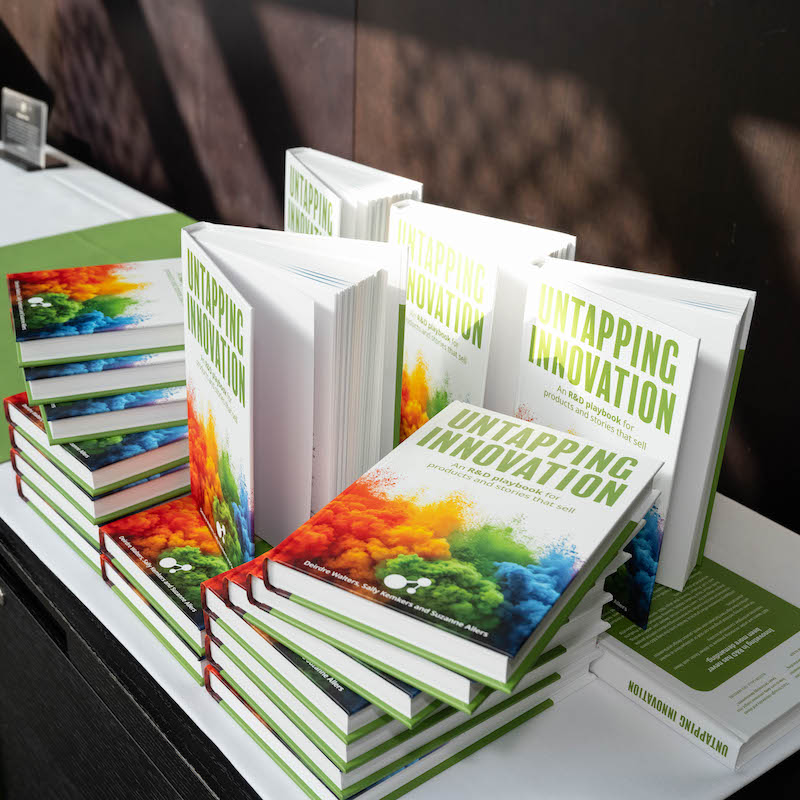
About Untapped Innovation. Flow was speaking at an event hosted by Untapped Innovation to celebrate the launch of their book. The website has a comprehensive resource section.