
![The Permeable Funnel model of Open Innovation[click to enlarge]](https://www.rndtoday.co.uk/wp-content/uploads/2017/05/Permeable-Funnel.jpg)
Ideation and creativity is a vital part of the R&D process and one that is of great interest to managers.
Creativity can seem quite a messy discipline, but I find it useful to categorise it into 4 aspects: process, people, product and place. This classification is based on the 4P’s of creativity developed by the pioneering US creativity researcher, Mel Rhodes.
Process: This relates to the stages of the creative process, and tools and techniques to help.
This is the aspect of creativity that most people think of first. It encompasses useful descriptions of the stages of the creative process, and a wide variety of structured tools and techniques to help the process of generating new ideas in different situations. The best known tools include Brainstorming, TRIZ, 6 hats and Attribute Association, but creative people like inventing their own creative processes, so there are a lot of these (many only subtly different from each other!). However, in general they are trying to help users break free of fixed patterns of thought, gather new stimuli, make new connections, and tap into deeper (sometimes intuitive) insight into the problem.
People: This describes the traits and characteristics of creative people, and how to help them.
Creativity is a deeply human process, so it’s no surprise that insights from various branches of psychology and neuroscience can be very helpful in understanding how to encourage creativity and the process of ideation. It often takes a lot of work before a “good idea” is recognised as such, so creative people need to develop both persistence and their powers of persuasion. It’s important to realise that people differ quite profoundly in what helps or hinders their creativity. For example, while some people find structured tools useful for enhancing their creativity, the most creative people will often find them positively detrimental, but can be helped to be more effective in other ways. MBTI can give very useful insight into these personal preferences.
Product: This relates to the characteristics of creative “products”, and how to create these.
A product (which could be an artefact, a system or a service) would not be considered as creative if it were not both novel and useful. This is why skilled R&D innovators give high priority to understanding the “problem” they want to solve, particularly the “non-obvious hidden needs”, before starting the process of ideation. Useful techniques for uncovering hidden needs include Repertory Grid and Ethnographic research.
Place: This relates to the environment, within which creativity takes place, and how to improve it.
An idea may start in a single head, but good ideas will require a diversity of knowledge from a number of people, so it’s helpful if the environment encourages useful interactions and experiences. Creative ideas can very easily be stifled by fear of failure, rigid processes and or stringent performance targets, so organisational culture and management style are important. Important thinkers in this area include Amabile, Von Hippel and Takeuchi.
Anne Miller
More posts about ideation and creativity
Creativity paradox – why innovation fails between idea and execution
Creativity needs openness, curiosity and time to explore. Execution needs focus, evidence and control. If we only protect creativity, we get dispersion. And if we only protect control, we kill learning too early.
This tension, Abdelmoula El Hadi, Group Head of Innovation at Knauf Insulation, describes as the Creativity Paradox and he shares his actionable insights.
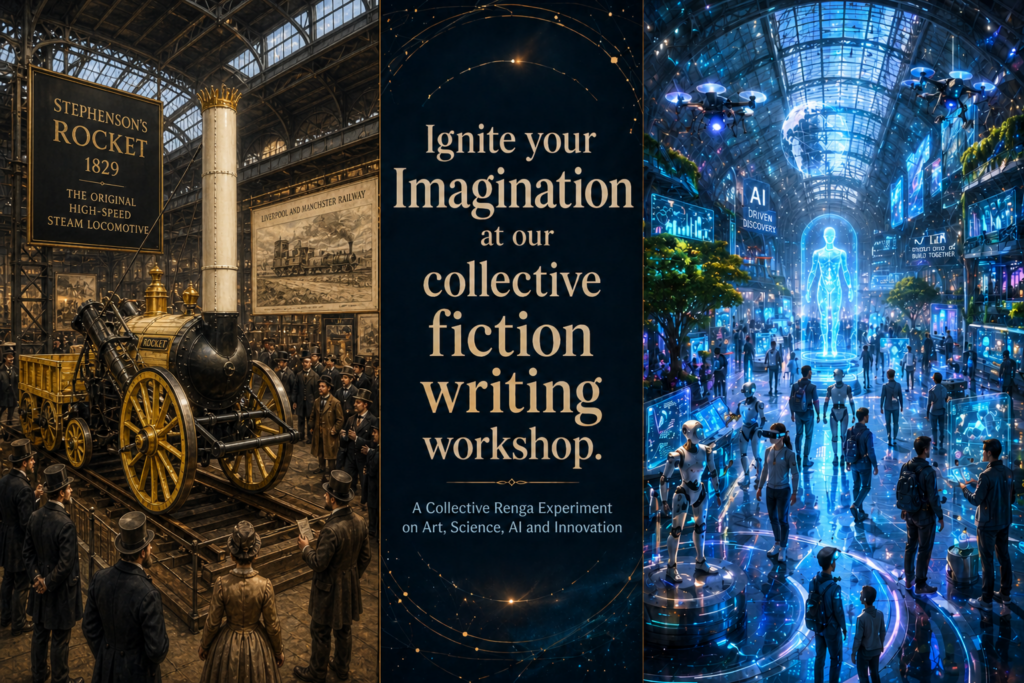
Ignite your imagination and boost your creativity – #RND 2026
This experiential workshop at the R&D Management Conference 2026 complements the paper session “Arts-Based Initiatives, Creativity and Innovation” (track 1.4). It offers all conference participants a creative exploration of how artistic practices foster innovation in times of disruption.
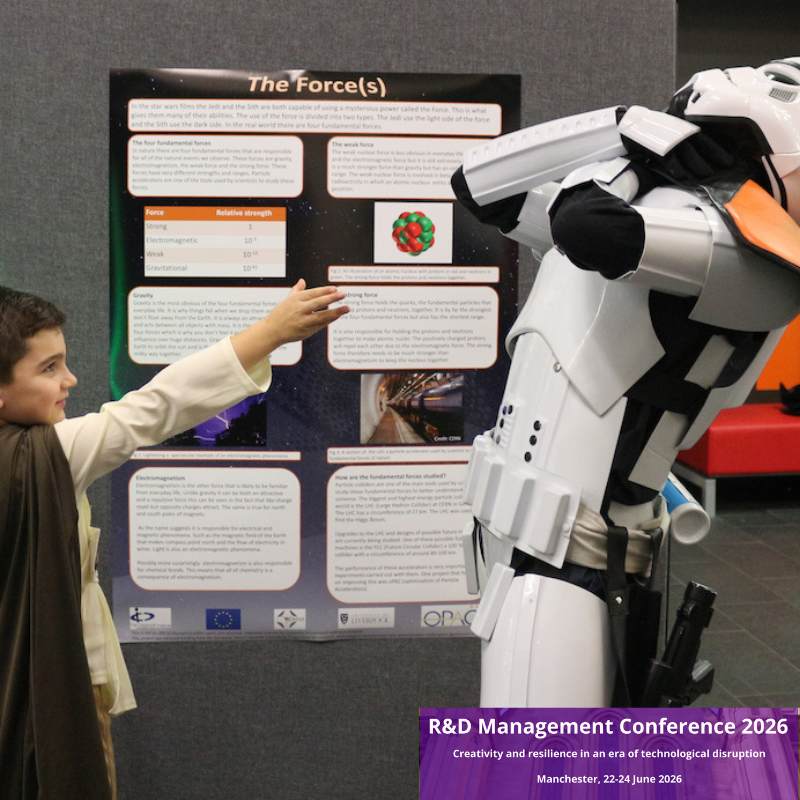
Human v’s AI vision of the future – creative workshop explores arts-based initiatives and innovation
Arts-based initiatives can enhance innovation by stimulating perception, imagination, and transformation. The humanoid robot character C-3P0 first appeared in the Star Wars in 1976, many years before droids became a reality. Creative writing can give insights into future technologies.
Crowdsourcing innovation at NASA – solving grand challenges
Crowdsourcing innovation doesn’t require a world expert, just someone who can connect the dots. Research from MIT found 70% of the time the successful challengers came from somewhere not in the domain of the challenge owner and in 75% of cases the solution already existed.
Crowdsourcing innovation and IP – what potential contributors should consider
The crowdsourcing paradox – Individuals that act as providers of knowledge need to exchange (codified and tacit) solution information to attract seekers and develop a solution, while they need to protect their knowledge base from unwanted knowledge leakages and spillovers.

Evaluating internal corporate venture ideas: strategic relatedness, feasibility, and novelty
How do internal corporate ventures select new business ideas? Using a resource-based lens, Merte Merde and his collaborators, examined venture proposals within a multi-business firm. Focusing on strategic relatedness, idea feasibility, and novelty it provide insights into the internal selection dynamics within a complex environment.

Arts Value Map: an alternative way to measure creativity
Companies introduce the arts, not just as an organisational and management initiative but also as an experience-based process that will provide enjoyment and drive value to the business. How do you measure the value created?

Art thinking – putting the creativity back into innovation
Virtually every Nobel Prize winner is a polymath in some way. Fifty percent of the scientists and closer to ninety percent of mathematicians have a highly developed avocation for music. Art thinking can add creativity to innovation.

What is the role of social media in new product development?
The Adidas Creators Club is a platform where customers and athletes share ideas and participate in the design process. This type of collaborative R&D is made possible by social platforms but how can the power of social media be captured for new product development?

Decline in academic freedom is impacting innovation output, warns study
Innovation output is directly proportional to academic freedom and researchers warn that this has declined over the last decade for the first time since 1940s.

Role of virtual spaces to include elderly at fuzzy front end of innovation
Living labs have an important role for collaborative innovation, but elderly consumers may have difficulties participating in a virtual cafe. This research project investigated the role of intermediates and found they have a valuable role in facilitating the involvement of the older population at the fuzzy frontend of innovation.

Entrepreneurship and democracy in decline
Entrepreneurship has been on global decline since the turn of the century and so has democracy. This is not a coincidence according to David Audretsch of Indiana University He says “democracy and entrepreneurship are inextricably linked. Both are manifestations of the same underlying force — freedom of thought, decision-making and action.”

Covid, the ultimate burning platform, tears up the ‘Innovation Playbook’
Organisations often talk about the importance of having a burning platform as the catalyst for change. Peter Robbins discusses how Covid, the ultimate burning platform, accelerated the innovation process and intensified collaboration between new partners across the private, public and third sector; partnerships that would have been unimaginable beforehand.

If you are what you eat, is what you eat what you think?
If you had a new technology to design a new food product would you create something new or slavishly produce a replica of a familiar dish? Benjamin Wurgaft is exploring the future of food in his keynote at the R&D Management Conference
Innovation by experimentation
This track at the R&D Management Conference explores the potential of experimentation, both success and failure, and the implications for the organisation. We are hoping to offer a new perspective on knowledge creation says Alessandro Narduzzo.

Focus on antimicrobial resistance and a surge in quantum computing research are R&D predictions for 2022
What are your predictions for hot topics for 2022? Innovation experts at the Pistoia Alliance cite tackling antimicrobial resistance, quantum computing to optimise supply chains, commercial space travel and use of AI in drug discovery.

Marketing Innovations: Adoption, diffusion and commercialisation
Traditional marketing techniques often prove to be ineffective for the design and diffusion of truly innovative offers, hence the need for a real “innovation marketing” but what techniques are available?

Are female solvers an undervalued resource in crowdsourcing?
Crowdsourcing has the potential to deliver high-value solutions at very low cost, according to Christopher L. Tucci Professor of Management of Technology. Female solvers, in the outer circle develop particularly successful solutions.
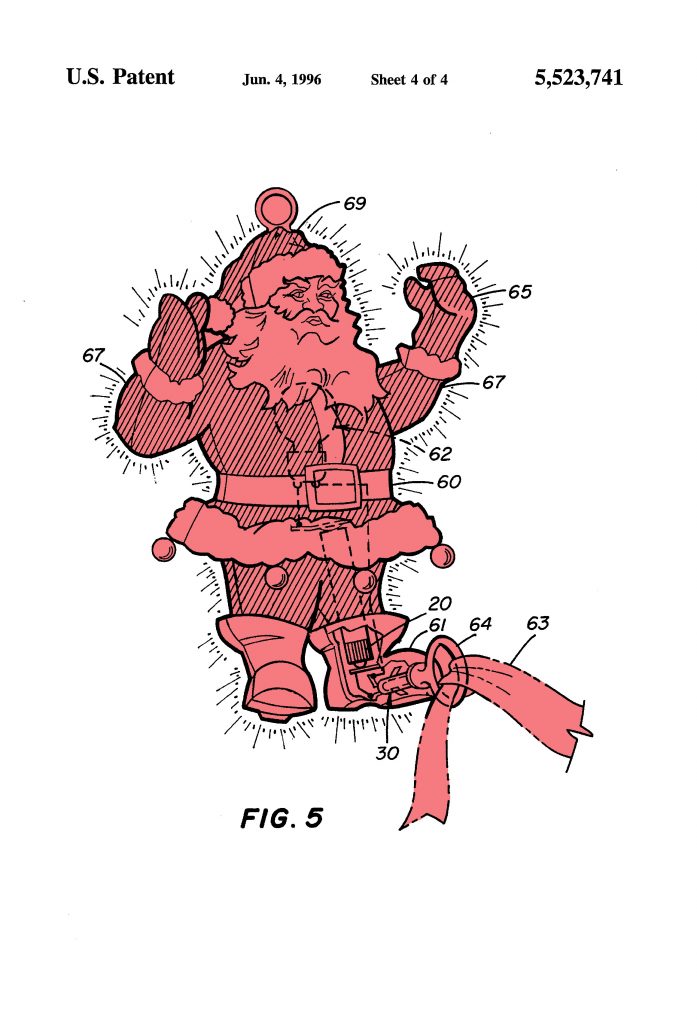
Are these the best (or worst) festive inventions?
By using AI at the front end of invention the ideas are not subject to personal bias. However, human evaluation of the options is still vital to ensure feasibility

Can creativity help a company survive in turbulent times?
To compete effectively in a marketplace marked by turbulence, those that place an emphasis on the soft skills will have an advantage, argue authors of this paper

Make time for re-creation
The quality of our ideas can be improved by connecting different concepts and building on existing ideas. In fact, researchers showed that over five weeks a meditating group was able to significantly increase their ability to improve on each other’s ideas.

Innovation deficit at heart of Europe’s slow growth
At the heart of Europe’s slow growth lies its innovation deficit. Europe does not capitalise enough on the knowledge it has and produces.

Ideation and creativity in R&D
Creativity can seem quite a messy discipline, but I find it useful to categorise it into 4 aspects: process, people, product and place, based on work by the pioneering US creativity researcher, Mel Rhodes.

R&D Management Conference 2017 call for papers
Call for papers for the R&D Management Conference 2017 special session Intellectual property management for Sustainable Innovation.
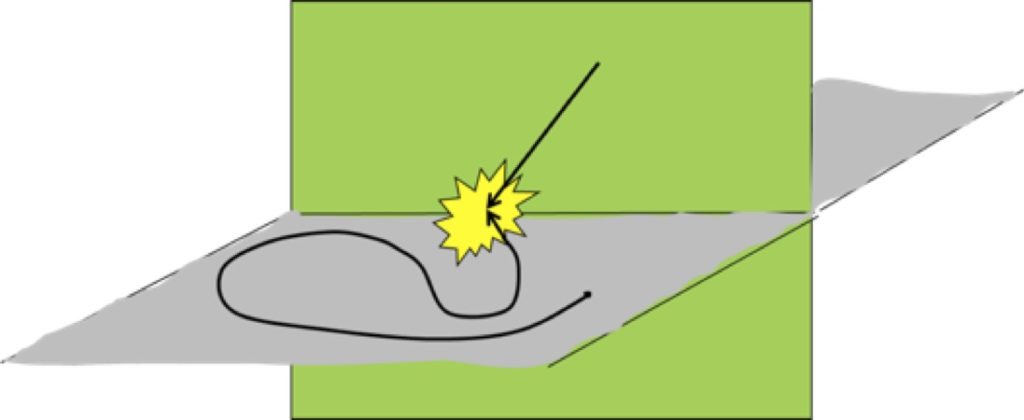
Where do ideas come from?
People often think that being innovative means having a lot of ideas. But where do the ideas come from? The history of innovation is full of examples of people suddenly coming up with ideas apparently “out of the blue” with Isaac Newton’s apple only one of many examples. But when you look more closely, you […]

Once upon a time…
Stories reinforce our models and understanding of how innovation works in a vivid way. Not for nothing do they form the staple diet of most conference presentations, and in a more restrained fashion form the core of our teaching explains John Bessant.