Why have multinational firms like Unilever historically failed to innovate?
The challenge for main players in personal care is often geopolitical. The R&D operation is too far from its market. Three quarters of Unilever’s R&D spend is in the United States, China, and Europe and yet 60% of its sales are in emerging and developing markets.
So, we have had people in the west designing for people in the east and south of the equator.
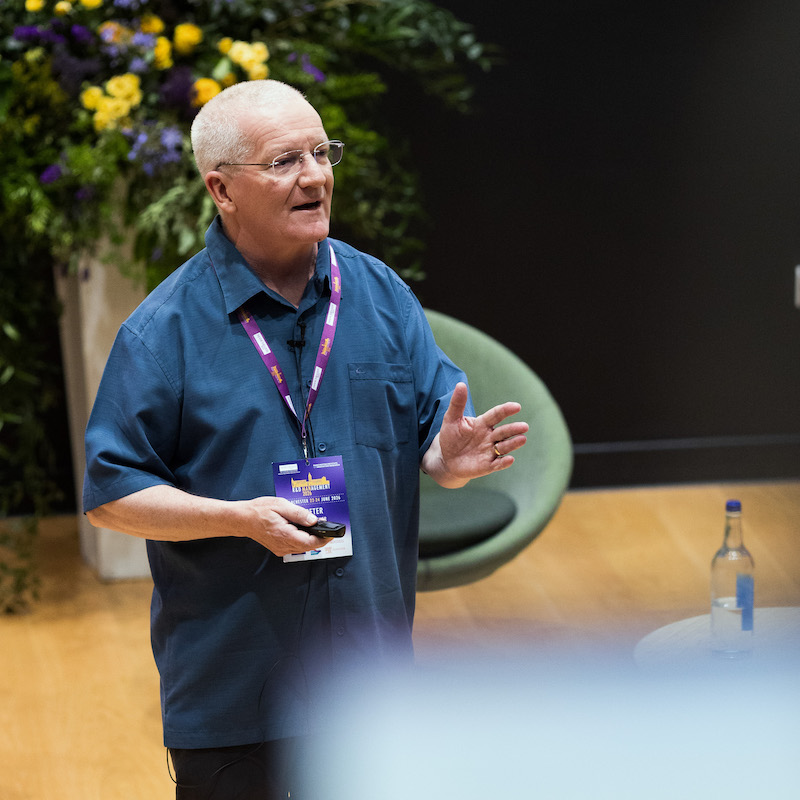
Peter Gallagher, former executive Vice President of Strategic Sciences at Unilever, describes at the R&D Management Conference how the company restructured its global R&D activities to align innovation with customer insights and market opportunities.
Tension between autonomy and coordination
The innovation strategy of Unilever’s competitors such as P&G and L’Oréal was described as ‘mindlessly global’. The assumption was that hair and skin were the same everywhere in the world. The budget was controlled centrally with no debate on how to deliver locally – one solution fits all.
Unilever, by contrast, was described as ‘hopelessly local’. The company was fragmented with CEOs in each territory in control of their own budgets, there was no economy of scale or shared learnings as each CEO was in competition with his peers.
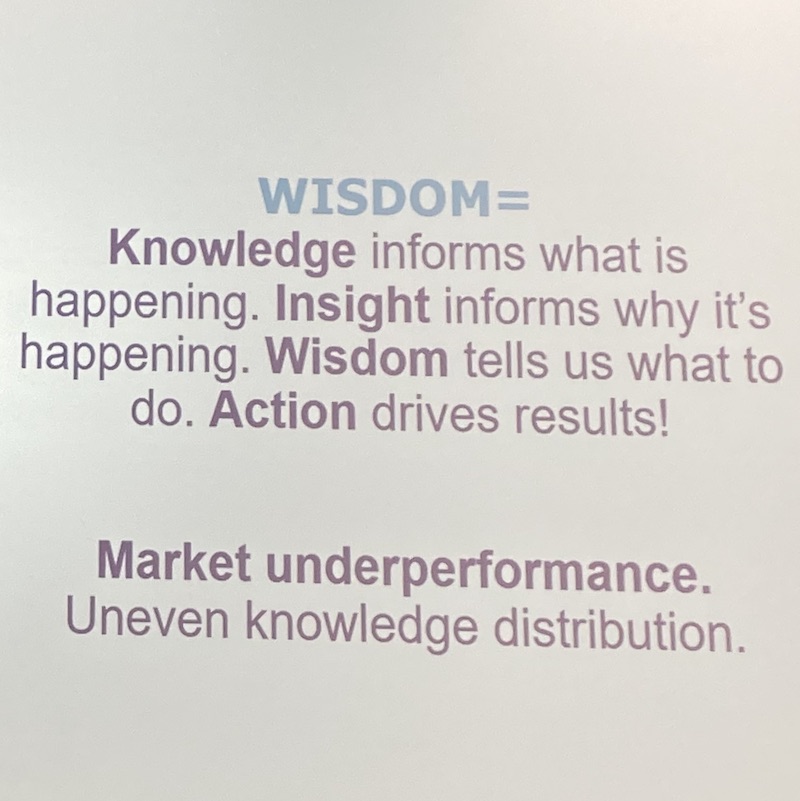
This tension between autonomy and coordination could be seen when the firms launched a product. If P&G launched a new product in Brazil the whole company would know in 24 hours, in Unilever it would take months for the news to promulgate through the company.
Unilever board director Ian Anderson famously said:
“If only Unilever knew what Unilever knows!”
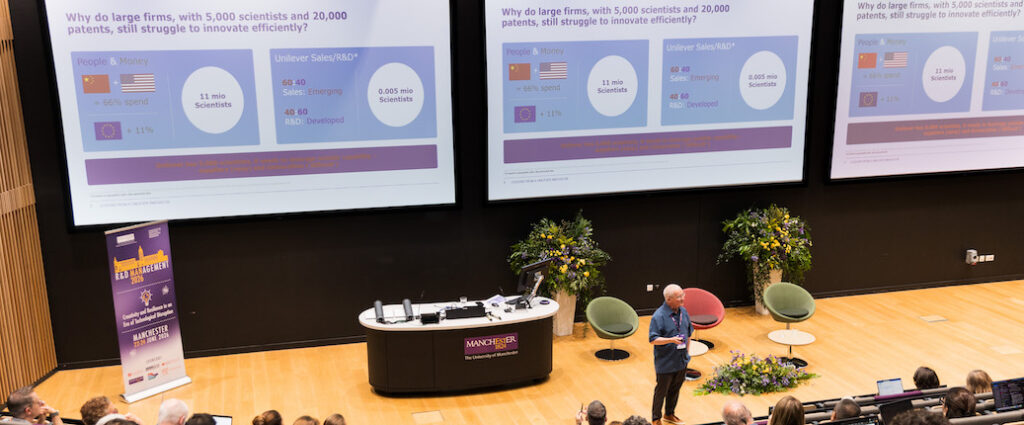
A change of strategy – global teams with local insights
Fast forward to present day and we have got global control with local inputs that shape international brands.
This situation changed when Unilever gained input from a Harvard Management Consultant and the company restructured its R&D. It put in place a concept called ‘Innovation Project Management’, which revolutionized the process by getting everyone on the same page.
Control moved from local to global teams with local input and accents. The messaging and budgets were taken centrally.
There are now 8 global innovation centres with R&D in 60 local markets, and an ecosystem around it. The labs have been automated to enable 24-hour experimentation, with AI used as a force multiplier to curate and analyse the data and create actionable insights. From this it is now possible to see trends and we can start to make predictions about what is happening.
Unilever innovator
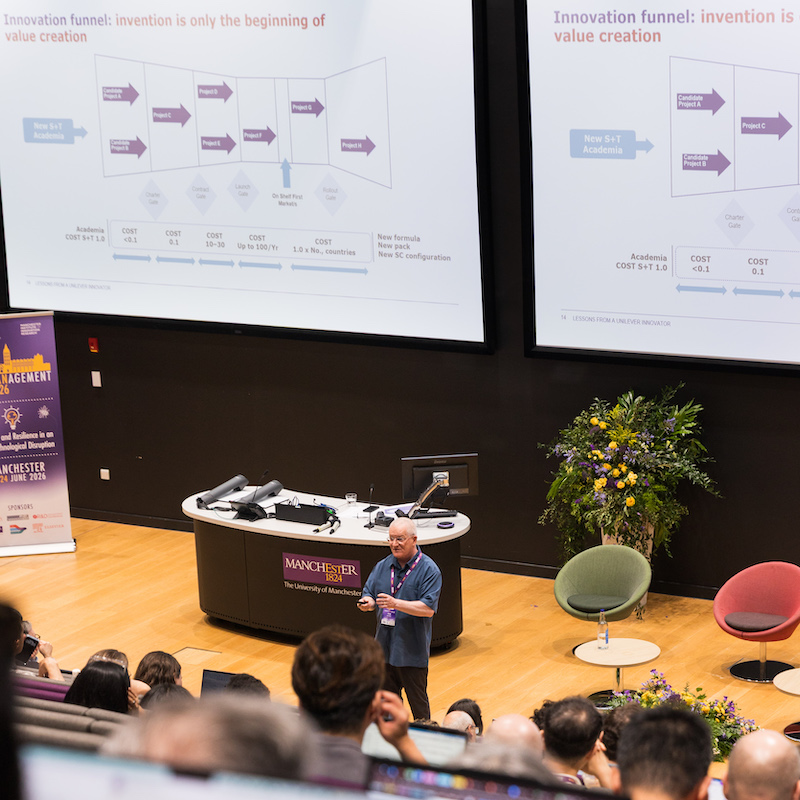
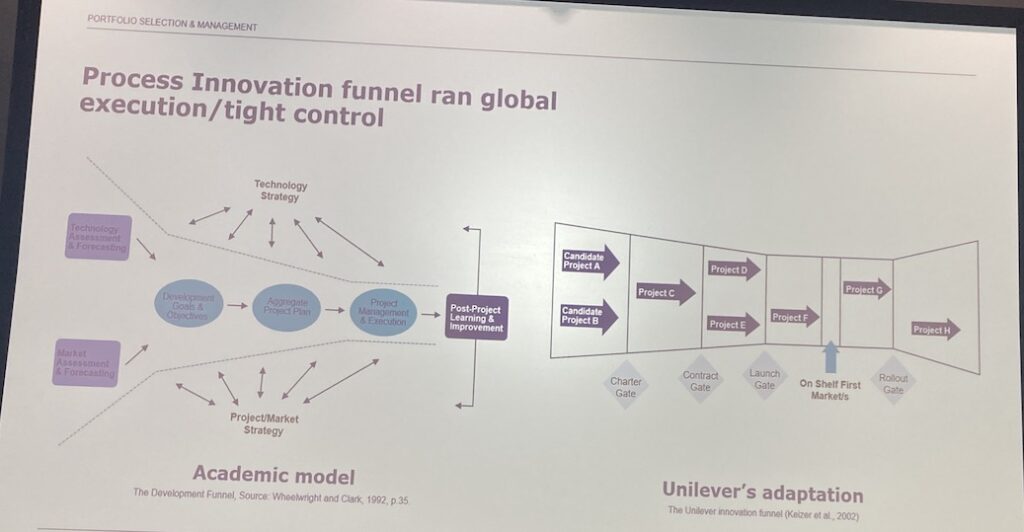
The company also adopted portfolio management, adapting the academic innovation funnel with a stage gate system to decide whether to proceed or drop projects. As the product moves through the funnel the costs increase, until finally you get to the point of having trials with 50,000 consumers around the world, to ensure it delivers benefit and the brand promise.
Once you have got a set of ideas, you need to decide which to progress with.
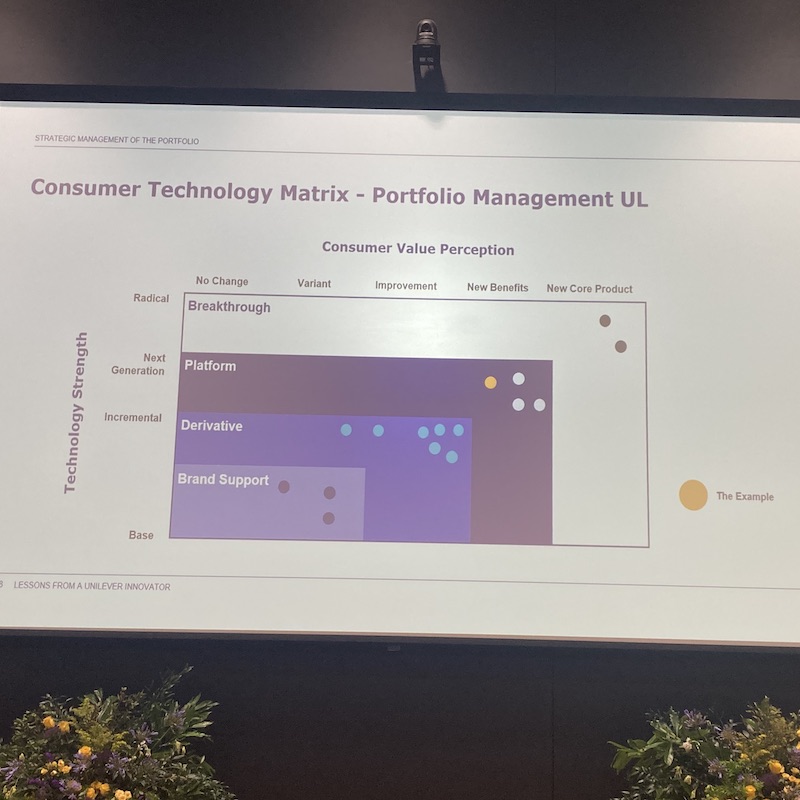
Again, we worked with Harvard to develop the Consumer Technology Matrix. This plots technology strength against consumer value perception.
At the Base level these are incremental improvements that increase margins for the company, but the consumer sees a small improvement. The extreme is radical innovation, which is risky but can result in revolutionary new product developments.
From this you can start to build a portfolio.
To help gain buy in from the management for a project idea, Peter came up with the four-box matrix.
- The consumer needs.
- The technology solution
- Demo and concept used to articulate the proposition.
- The job to be done.
Case-study: Improving child life expectancy with hand soap
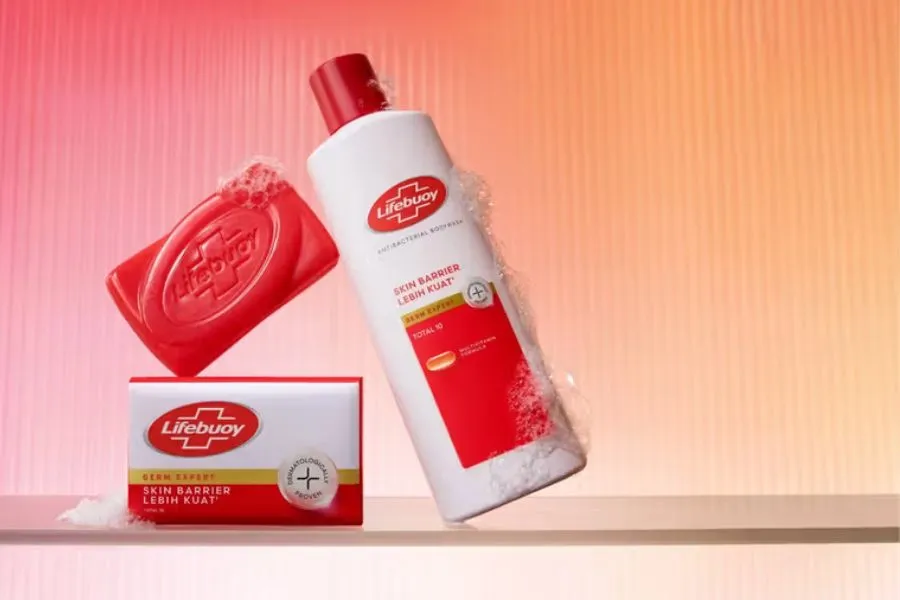
An example of a next generation platform technology is the transformation of Lifebuoy Soap a 130-year-old brand from ‘carbolic cleanser’ to ‘skin protection’.
Every year about 2 million children die before their fifth birthday from diarrhoeal disease and pneumonia. Preventable diseases that could be avoided by hand washing. But the challenge is not just the lack of knowledge about the benefit but also the time it takes for current hygiene solutions to work. Children don’t spend long enough washing their hands to kill the germs.
The R&D team could see that there was a massive unmet need. However, budget allocated internally was not sufficient to make a real impact on the problem. So the team needed to engage hearts and minds to find the budget externally. The company made an impactful video to communicate the challenge and this got the support of the CEO, and external influences including Barrack Obama.
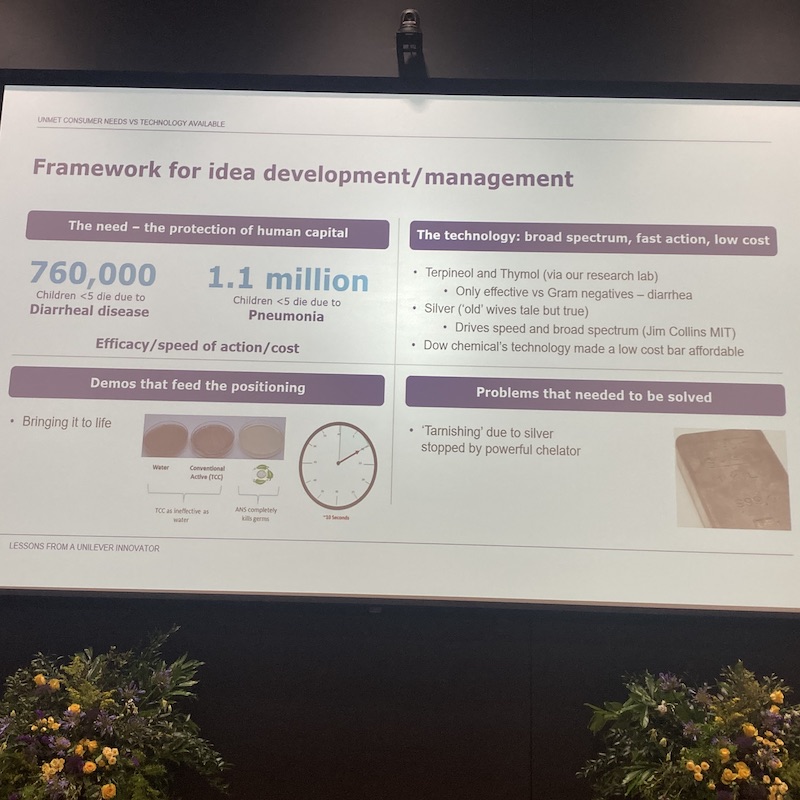
To tackle the core problem, the head of the lab came up with an improved formula using plant-based ingredients Terpineol and Thymol, which successfully killed all the bacteria, but it was too slow. A chance encounter with academic Jim Collins, a pioneer of synthetic biology, revealed that silver could be used to rejuvenate the antibacterial properties and accelerate the kill rate – the advanced germ protection, branded as Activ Silver Formula, gives 99.9% germ protection in just 10 seconds.
However, the problem was that the silver created a tarnishing affect that made the soap brown – and nobody wants to wash with brown soap.
This challenge was solved through a collaboration with Dow Chemicals, which resulted in the development of POLYOX™ (polyethylene oxide) a class of water-soluble polymers that Unilever incorporated into its Lifebuoy™ soap bar to improve its texture, durability, and lather in developing markets.
This chelator also made the lather feel like silk, transforming the humble soap bar into a desirable skin care solution.
The team got the bar to market, using an educational campaign that was well received by the consumers. Uptake of Lifebuoy Soap resulted in a 75% decrease in diarrheal disease in a village called Thesgora, which previously had been an epicentre for the disease.
The strategy is notable not merely for its social impact, but for how it structurally aligned brand purpose with business growth across low-income consumer segments.