Two of the big questions for the economies of the world are “How to sustain economic growth?” And “What keeps us on the current trajectory?” Both these challenges have been addressed by this year’s winners of the Nobel Prize for Economic Sciences 2025 – Joel Mokyr, Philippe Aghion and Peter Howitt.
Sustained economic growth through technological progress has only been a phenomenon of the past two centuries. Prior to this, even the impact of game-changing innovations was short-lived.
The starting point for these laureates is the viewpoint that innovation and technological change are the key drivers of sustained economic growth. And they seek to explain how a regime has emerged in which new products and processes are continously introduced into the market, despite the conflicting interests they create.
Their models are already making a significant contribution to the field of R&D Management.
A very useful backgrounder has been produced by The Committee for the Prize in Economic Sciences in Memory of Alfred Nobel and the following is a synopsis.
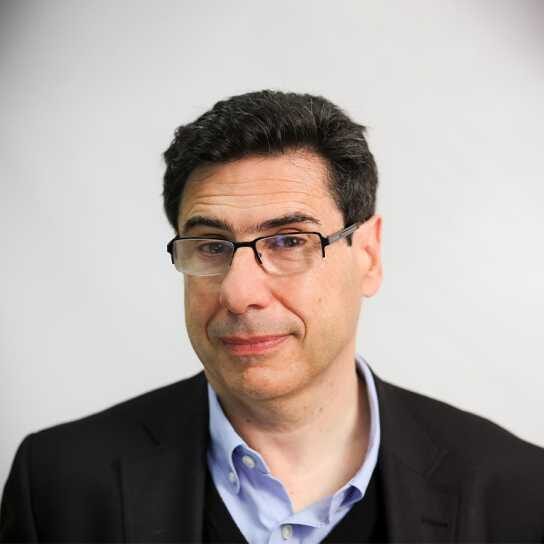


How to sustain economic growth? The vital role of practitioners
Economic historial Joel Mokyr looked back to the Industrial Revolution and has identified a set key requisities that were not jointly present before the Industrial Revolution. His findings underline the importance of having practitioners.
He argues that although the Enlightenment was a major boost to science, it did not mechanically create applications that led to economic growth, for this you needed ‘practitioners’, who were willing to engage with science and able to liaise with the makers and producers.
He also stresses the importance of intellectual tolerance for new ways of thinking, as without this support established interest groups would thwart technological change.
He attributes the presence of both these factors as the among the reasons why the Industrial Revolution started in Britain, citing also the democratic system of the time.
In his work, Mokyr distinguishes between:
- Macro inventions – these are radical technological discontinuities. Macro inventions following a shift in knowledge or understanding, or where there has been a new combination of previously disparate ideas. The types of inventions have occured through history – consider the steam engine and printing press – but in the past these have emerged sporadically and failed to generate cumulative microinventions.
- Micro inventions – these are incremental improvements to existing technologies and can be explained by changes in economic supply or in demand. They provide a link between technology and the economy. However, in the absence of new ideas that broaden the horizon and create potential for innovation, these have diminishing returns.
These two processes were present before the Industrial Revolution but failed to create sustained growth. Mokyr investigated how this changed and proposes the sustained technology-driven economic growth requires the joint evolution of science and technology, to create an accessible repository of ‘useful knowledge’.
This knowledge has two elements:
-
- Propositional knowledge – relates to knowledge about the physical world and natural phenomena.
- Prescriptive knowledge – support for the technological processes of economic production
He argues that it was not until propositional knowledge was scientifically tested and applied, that it became part of a generalised knowledge-base which today is considered as ‘science’. This science then feeds into the prescriptive knowledge domain, where knowledge is applied and tweaked, and this leads to future developments.
Societal changes at the time also created a language for science – with new standards, scientific methods and a common vocabulary. This enabled useful knowledge to be more widely accessible and allowing the transfer of ideas from experimental philosophers to artisans, farmers and engineers to be put into practice.
As the connection between propositional and prescriptive knowledge became tighter, from the 1800’s it started to have a real impact on the economy. Technological success inspired future confidence in the science knowledge-base, leading to advanced knowledge accumulation. Growth then became sustained.
Pre-requisites for sustained technology-driven growth according to Mokyr
- Positive feedback between science and technology
- The presence of skilled practitioners – highly educated people who think for themselves and can transition between the worlds of abstraction and practicalities of construction and production.
- A society open to change – a culture of growth that overcomes the restrictive practices of those with vested interests. This includes the development of new institutions to encourage competition and also support for those disadvantaged by change to enable them to adapt and benefit from the new opportunities.
Creative destruction -Philippe Aghion and Peter Howitt
The theory of growth through “Creative Destruction” has been developed by Philippe Aghion and Peter Howitt, to describe the process of innovation and ‘business stealing’ in an economy characterised by constant churning.
Aghion and Howitt set out to discover how innovations come into practice in today’s society. They put entrepreneurs centre stage and analysed the process of constructive destruction – this is the concept that innovation carried out by one firm or individual partially destroys the rents (profits) of others. They constructed a mathematical framework to study how individual decisions at the microeconomic level can lead to steady output growth at the aggregate level.
Advanced economies are very dynamic with growth happening in parallel to the continuous process of entry, exit and churning of production factors. The main study object forAghion and Howitt was firm entry and exit rates in the US together with the rates of job creation and destruction. In a typical year around 10% of firms enter or exit the market and the production factors are redistributed.
A higher substitutability of products implies a higher level of competition and lower profits. Therefore, by creating a productivity edge, a competitor will be able to produce more and charge a higher mark-up.
This ‘productivity gap’ creates an incentive to innovate and invest in R&D. The higher the elasticity of subsitution the higher the incentive to innovate.
The scholars hypothesized that firms that downsize or exit very rapidly must have been hit by a large negative shock. The creative destruction theory provides a powerful explanation for this, as firms that see their products eclipsed by the innovation of a competitor rapidly loses business. A higher entry rate is therefore associated with a higher exit and higher job destruction rate for the incumbents – churn.
The model created a number of predictions that were supported by the data, connecting literature on macroeconomic growth with the field of industrial organisation.
This framework also enables modelling of policy, such as changes in patent protection, competition policies, or R&D subsidies, and to see its impact on innovation-led growth.
Learning points for policy aiming to sustain economic growth
The big picture perspective of Mokyr and the analytical precision of Ahion and Howitt has given us tools to examine the drivers for socio-economic improvement.
Productivity growth rates in advanced economies have slowed down since the 2000s, and they have seen falling entry and exit rates and declining job reallocation – a reduction in creative destruction. This demonstrates the relationship between competition and innovation, and how increasing concentration of market power into the hands of just a few players can reduce growth.
Additionally, sustained growth is not equal to sustainable growth in a world of physical barriers. However with a science and technology view it is possible that these environmental and social challenges create opportunites for novel techniques to address them.
Challenges
- Impediments to the open exchange of ideas and fading support for science could pose future threats to economic growth
- How to regulate dominate tech and pharmaceutical companies without harming technological progress
- How to create the right regulatory and societal environment to ensure AI enhances the positive feedback loop between science and applied technology
Together these laureates have provided us with tools and offer important insights into how to address the threats to progress and make the most from future opportunities.
More information
Joel Mokyr, Northwestern University, Evanston, IL, USA, Eitan Berglas School of Economics, Tel Aviv University, Israel
Philippe Aghion, Collège de France and INSEAD, Paris, France, The London School of Economics and Political Science, UK
Peter Howitt, Brown University, Providence, RI, USA
A useful backgrounder “Sustained economic growth through technological progress” written by The Committee for the Prize in Economic Sciences in Memory of Alfred Nobel gives an overview of the work of the laureates and the scientific background to the Sveriges Riksbank Prize in Economic Sciences.
A Culture of Growth: The Origins of the Modern Economy, Joel Mokyr, a revealing look at why Enlightenment culture sparked the Industrial Revolution
Mokyr, J. (2018a). Editor’s introduction: The new economic history and the industrial revolution. In J. Mokyr (Ed.), The British industrial revolution: An economic perspective, pp. 1–84. Milton Park, U.K. Routledge.
Mokyr, J. (2018b). The past and the future of innovation: Some lessons from economic history. Explorations in Economic History 69, 13–26.
Mokyr, J. (2020). Creative destruction or destructive creation? A prelude to the industrial revolution. In U. Akcigit and J. van Reenen (Eds.), The Economics of Creative Destruction, Chapter 26, pp. 714–735. Cambridge, Massachusetts: Harvard University Press.
Mokyr, J., A. Sarid, and K. Van Der Beek (2022). The wheels of change: Technology adoption, millwrights and the persistence in Britain’s industrialisation. The Economic Journal 132(645), 1894–1926.
Aghion, P., C. Harris, and J. Vickers (1997). Competition and growth with step-by-step innovation: An example. European Economic Review 41(3), 771–782.
Aghion, P. and P. Howitt (1992). A model of growth through creative destruction. Econometrica 60(2), 323–351.
Aghion, P. and P. Howitt (1994). Growth and unemployment. The Review of Economic Studies 61(3), 477–494.40
Aghion, P. and P. Howitt (1996). Research and development in the growth process. Journal of Economic Growth 1(1), 49–73.