RADMA scholar Seung-Hyun Lee is now a Research Fellow in metascience at the Research on Research Institute (RoRI), based in UCL’s Department of Science, Technology, Engineering and Public Policy (STEaPP).
She gained support from RADMA for her research, which culminated in a thesis “Exploring the Positioning of Research Actors through Interdisciplinarity and Research Collaboration: Insights from the Case of Korean Public Research Institutes”.
She was awarded a PhD in 2025 by the University of Manchester.
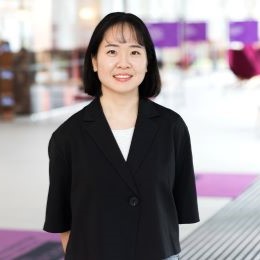
My academic interests centre on how research systems evolve, how different research actors position themselves within national and global innovation landscapes, and how policies and evaluation frameworks shape these dynamics. I am particularly motivated by questions around interdisciplinarity, collaboration, and the strategic roles of public research organisations.
In my current role at RoRI, I continue to explore these themes through empirical and policy-relevant research, especially as part of the AGORRA (A Global Observatory of Responsible Research Assessment) project, which contributes to efforts to reform research assessment and strengthen the role of research in society.
AGORRA aims to develop more robust, responsible, and future-facing approaches to evaluating research and researchers.
This builds on my doctoral research at the University of Manchester, which explored the positioning of public research institutes within national innovation systems and contributes to emerging debates in metascience around interdisciplinarity, collaboration, and innovation.
Case study: Korean Public Research Institutes (PRIs)
My PhD, initially titled “How indicator systems could represent complex R&D systems with variegated outputs and activities?”, began by questioning the limits of conventional research indicators and evaluation frameworks.
While indicator systems are widely used to assess research performance, they often struggle to capture the diversity, complexity, and strategic purposes of different research actors within an innovation system. As the project developed, this challenge led me toward a broader conceptual question: how can we more meaningfully represent the roles, functions, and positioning of research actors within complex R&D systems?
To explore this, I focused on the case of Korean Public Research Institutes (PRIs), historically central to Korea’s technological development but now required to redefine their place within a more dynamic research landscape.
Instead of relying solely on traditional metrics, the thesis integrated two rich sources of evidence—interdisciplinarity and research collaboration patterns—as alternative lenses for understanding how PRIs create value and position themselves.
- Interdisciplinarity was examined through the concepts of variety and balance across scientific fields, supplemented with qualitative reflections on the diverse characteristics and boundaries of disciplines.
- Research collaboration was analysed through co-authorship networks, cluster structures, and detailed mapping of different types of partners, from industry and universities to international collaborators.
These analyses served not only as indicators but also as representations of roles, functions, and impact of these PRIs within the innovation system.
By combining these dimensions, the study provided a more nuanced and multi-faceted approach and perspectives to representing research actors—one that moves beyond performance metrics and acknowledges the complex interplay between research portfolios, collaboration patterns, and organisational missions.
The findings also highlight the shortcomings of existing evaluation systems and offer new conceptual and methodological perspectives for policymakers seeking to align evaluation practices, strategic goals, and the evolving positioning of public research institutes.
RADMA’s crucial role
RADMA’s support played a crucial role in my doctoral journey, enabling me to pursue a long-term, data-intensive project that combined scientometric, network-analytic, and qualitative approaches. I remain grateful for the opportunity to contribute to the R&D management community and aim to continue producing research that informs strategy and policy in complex research and innovation environments.