There is global drive towards decarbonization in automotive manufacturing, which is significant, as it is a cornerstone of the modern industrial economy and a major contributor to greenhouse gas (GHC) emissions. In 2024, the car industry accounted for around 6% of gross value added by manufacturing, equivalent to around 1% of global GDP.
The drive for decarbonization in automative manufacture
Although attention is more often focussed on emissions from vehicle use, manufacturing, material processing and supply-chain activities also make a major contribution to GHG emissions.
Ahead of the global move towards Net Zero by 2050, a number of big brands have committed to achieving carbon-neutral manufacturing within a tighter timeframe.
For Aston Martin manufacturing efficiencies, delivered through streamlining its paint shop strategy at its Gaydon and St Athan facilities, provided a 3.9% fall in CO2 emissions per car manufactured in 2022 . (SMMT)
Jaguar Land Rover has set a target to become carbon net-zero across its supply chain, products, and operations by 2039. It has already reduced its global vehicle manufacturing operating CO2 by 46% per vehicle. This has included roof-top solar panels spanning 3,000m2 at its Advanced Product Centre, as well as redeveloping the site to increase biodiversity by 25%.
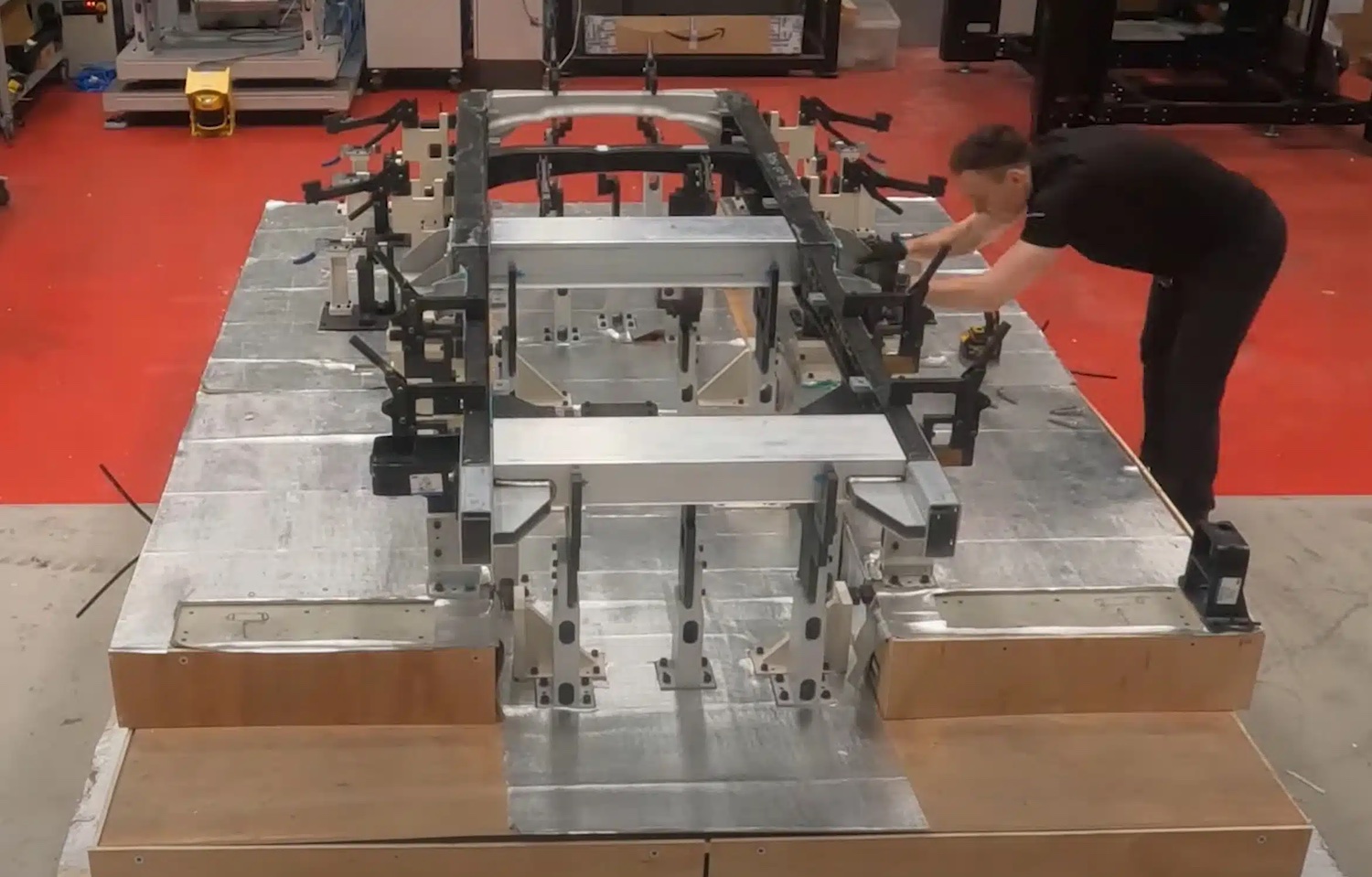
However, to achieve the net zero target across the whole value-chain is challenging. Many of the players are SMEs where there is a significant lack of green skills, materials used are energy intensive and, using current technology, manufacturing emissions for EVs are around 40% higher than their internal combustion engine counterparts .
To support SMEs improve their sustainability reporting, the Centre for Sustainable Innovation at the University of Salford has just completed a pilot executive education programme, called Sustainable Futures. The programme has used an ecosystem approach to support tier two and tier three organisations in the automotive supply chain, build capacity in their green skills.
The pilot was well received by the participants and now provides potential for a model of best practice. Additionally, the learning points suggest that there is an important role for executive education in accelerating the culture change that is needed for decarbonization in automotive manufacturing.
Achieving Net Zero through supply chain engagement
Deep decarbonization in automotive manufacturing requires more than isolated efficiency measures, it needs a whole systems approach and reconfiguration of the core business models therefore education and capacity building interventions are imperative.
Ann Mulhaney, Associate Professor of Change Management at the University of Salford (UoS) and her colleagues Silvia Tedesco, David Sutcliffe, and Paul Jones, have been piloting an executive education initiative to support SMEs in the UK automotive sector develop green skills and create actionable sustainability plans.

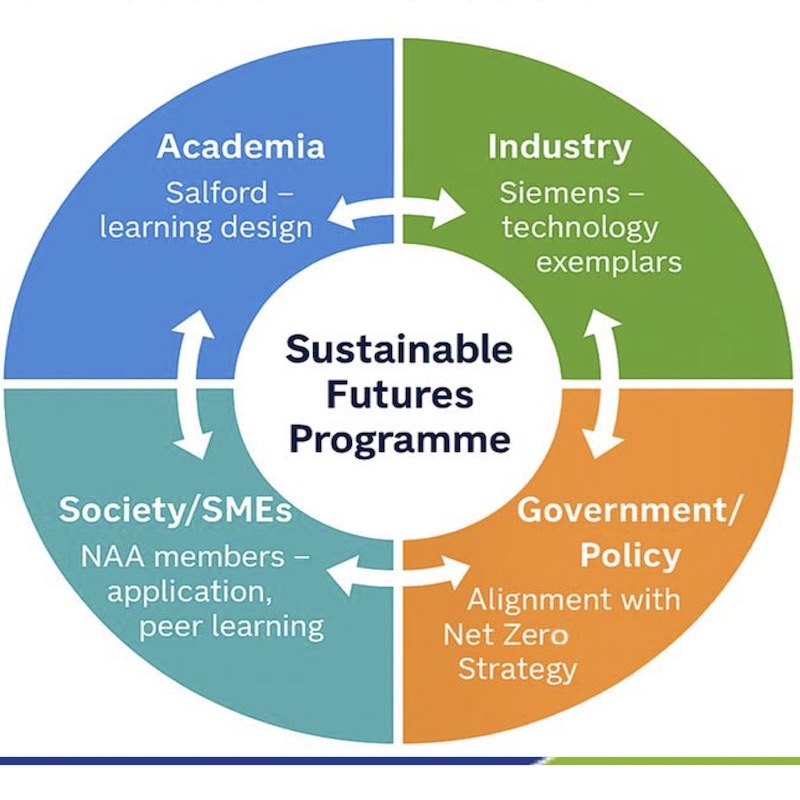
The “Sustainable Futures Programme” engaged representatives from across the automotive ecosystem. With input from Siemens plc and the Northern Automotive Alliance (NAA), the team at the University of Salford’s Centre for Sustainable Innovation created a blended learning model that used workshops, site visits and peer-learning to embed experiential, collaborative, and applied learning.
It was based on the sustainability transitions theory, which frames industrial decarbonization as a ‘multi-level process involving niche innovations, regime shifts and landscape pressures’
Ann Mulhaney comments: “Sustainability requires a cultural shift and community impact is an important element of the process. Executive education initiatives can support this by functioning as niche experiments, creating protected spaces where actors can develop and test new practices.”
Sustainable Futures included site visits to Siemens, a webinar with JLR and workshops with peers to share experiences. All of this was outside of the normal working environment for the SMEs.
Robbie Williams, QHSE for Tracoinsa (now Expert Technologies Group) one of the participating SMEs, found the blended approach particularly beneficial saying:
“The site visits provided valuable insight into how other organisations are approaching sustainability in practice.
“When combined with the knowledge and guidance gained through working with the University of Salford team, this experience has given us the confidence to progress our sustainability journey effectively.
“We would also welcome the opportunity to continue collaborating with the peer group once the programme has concluded.”
Quadruple-Helix Model of Innovation
The quadruple innovation helix framework co-developed by Elias G. Carayannis and David F.J. Campbell, emphasizes that to be successful innovation policy, that aims to develop the economy, must be effectively communicated to the public and civil society.
The partners were chosen to provide credibility with the ecosystem and bridge the relevance gap between academic knowledge and SME realities.
- Siemens contributed its expertise in digitalisation and manufacturing decarbonisation, providing exemplar case studies (e.g., the Siemens Congleton facility) and practitioner insights into operational sustainability transformation.
- Northern Automotive Alliance (NAA) is a respected industry organisation with a membership of over 100 SMEs. Its involvement helped ensure that the programme addressed the real-world constraints of supply-chain actors and reflected the competitive, time-pressured context in which these firms operate.
Three NAA members participated in the six-month pilot:
Sigmatex Ltd (www.sigmatex.com) – a pioneer in the design, development, and manufacture of carbon fibre textiles to the composites industry. Within the automotive sector, its products offer a solution for body panels and roof structures, chassis and monocoques, battery enclosures and protection panels.
Tracoinsa System UK Ltd (TS) (www.experttechnologiesgroup.com) – a materials handling solutions supplier based in Widnes. It is now part of Expert Technologies Group which specializes in intelligent industrial automation and robotics solutions.
Preston Technical Ltd (www.prestontechnical.co.uk)- an innovative and diverse adhesive tape conversion company. It transforms rolls of tape into custom shaped sizes and configurations as an alternative to traditional mechanical methods of fastening.
Two diagnostics tools were used
- Carbon Calculator Tool: this was designed by the UoS to estimate Scope 1 (direct emissions), Scope 2 (energy-related emissions) and Scope 3 (value-chain emissions) from energy use, transportation, materials, and infrastructure/supply chain.
Using the tool was in itself a learning opportunity as it requires data collection and reflection.
- Readiness Survey (NetZero 360): This instrument assessed organisational maturity across multiple dimensions (Leadership & Strategy, Policies, Processes, Culture & Employees, Social Responsibility, Technology) and across five themes (Circular Economy Models, Green Finance and ESG Integration, Net-Zero Supply Chains, Sustainable Energy Transition and Decentralization, Biodiversity and Nature-Based Solutions) for a total of 35 questions rated from ‘Strongly Disagree’ to ‘Strongly Agree’.
Results were visualised for participants, showing strengths, gaps, and priority areas. Such readiness diagnostics serve as both baseline measurement and learning aid, prompting firms to examine internal structures and align priorities.
Support for sustainability planning
The programme assisted the production of sustainability action plans by the participants. These outlined specific targets, timelines, and governance mechanisms. The action plan was a deliverable from the programme.
Alongside these operational changes, the industry is investing in technological innovations.
Again, a whole ecosystem approach is required for adoption, so executive education provides a mechanism for fostering cross-sectional dialogue and co-production of knowledge.
Benefit of the Sustainable Futures approach
Robbie Williams, QHSE, of Tracoinsa (TSUK) commented that the ecosystem approach helped his team gain the buy-in from all levels in the company.
“Although TSUK was already in the early stages of its sustainability journey prior to joining the programme and had allocated some internal resource, the involvement of ecosystem partners significantly helped to reinforce the value of the proposed initiatives.
“The programme provided credible evidence of industry-wide support, which made it easier to secure buy in from both management and employees and added further momentum to our efforts.

“In addition, the visual management tools and structured support offered through the programme delivered tangible value by helping to educate the business on the expectations and requirements of operating as a responsible and sustainable organisation in 2026.”
Some observations from Sustainable Futures
NetZero 360 questionnaire was completed by 90% of employees across the three participating companies, it suggests that the participating SMEs are at a transitional readiness stage, moving from awareness and early integration, but still limited by data, systems, and leadership maturity.
Significantly while 64% of respondents agreed that the firm was committed to a net zero supply chain by 2050, only 17% reported having systems for tracking and measuring supplier emissions (Scope 3) and just 15% shared environmental data with suppliers. This mirrors national findings.
By benchmarking readiness, the NetZero 360 survey provided the companies with a diagnostic and leading tool, enabling participants to visualise maturity gaps and prioritise decarbonisation actions.
The carbon calculator tool again mirrored national findings that have found Scope 3 emissions dominate the carbon footprint of value chain members, but accurate measurement is limited by access to data.
The simplified structure enabled participants to overcome some of these limitations and prioritise areas for decarbonisation.
THE AUTOMOTIVE INDUSTRY – ON THE ROAD TO NET ZERO
Current technologies for material production within the automotive sector ecosystem are energy intensive. For example, carbon fibre materials used in body panels and roof structures, battery enclosures and protection panels are produced from polyacrylonitrile (PAN), a fossil-fuel-based acrylic resin. Production requires 40% more energy than steel.
However, the industry is making a significant in innovation to produce lower carbon alternatives creating opportunities across the ecosystem.
Developing alternatives supports decarbonization in automotive manufacture
Sigmatex is a pioneer in the design, development and manufacture of carbon fibre textiles and has been a major supplier to the automotive sector for almost 40 years. In that time has built an enviable reputation as the premier supplier to many of the world’s luxury, supercar and sportscar manufacturers.
Its range of carbon fibres include recycled materials, such as SigmaRF, which has been proven to perform in demanding applications requiring structural performance, fire resistance, low deflection (high stiffness) and good EMC shielding.

Hannah Ford, HSE Manager, Sigmatex explains that when the full life cycle of carbon components is considered, they do not deliver a positive environmental impact. This is due to their high energy use, fossil based raw materials and end-of-life challenges.
“To address this, Sigmatex is exploring several alternatives, including the manufacture of products using bio-based carbon fibre and investigating the use of alternative natural fibres such as flax and hemp.
“There is also wider industry development around the use of microwave technology for carbonisation,” she continues. “This offers a lower carbon alternative to the traditional electricity and gas systems used in the manufacture of carbon fibre and generates potential for improved energy efficiency.
“Together, these initiatives aim to reduce environmental impact, while maintaining suitable performance for industrial applications.”
Whole life-cycle approach – Preston Technical Ltd
Acrylic foam tapes are very high-performance bonding agents designed to last for the lifetime of a customer product. Innovation in the formulation and manufacture are seeing lowering of impacts.
Lee Parnel, Managing Director, Preston Technical Ltd agrees that a range of approaches are needed for decarbonisation while maintaining performance.
“Greener alternatives to acrylic foam formulations are unfortunately limited due to their inability to perform to high performance customer application requirements, although some progress is being made on producing natural rubber adhesives and solvent free bio-based adhesive tapes.
“These green options can reduce carbon footprint and environmental toxicity, even they are not biodegradable.”
“Most of the global adhesive tape manufacturers over the past five years have now developed, and are now producing, PFAS free acrylic foam tape formulations thus eliminating the issue of PFAS being a persistent and “forever” chemical in the environment whilst maintaining superb bonding performance,” he says.
“Long-term durability is the focus for our customers – which supports longer and sustainable product life cycles – this in turn helps to limit greenhouse emissions from a new product manufacturing process.
“There is also a lot of focus on manufacturing tape products which have recycled content, such as cardboard cores and recyclable PET films for liners.
“The manufacture of acrylic foam tape itself it has historically been quite energy intensive for coating, drying, and curing processes – but this is now being addressed by the introduction of solvent free coating lines, heat recovery systems for drying, and lower energy consuming curing base formulations.”
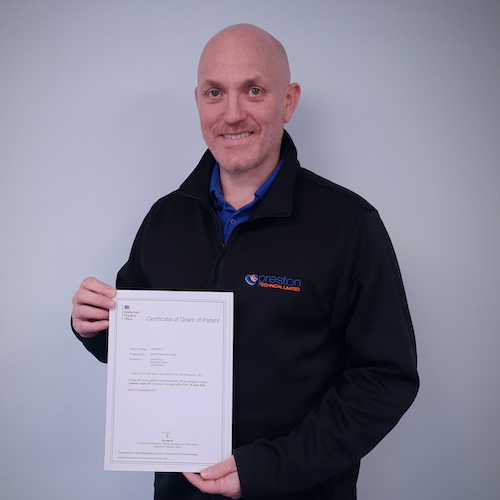
Preston Technical is a diverse adhesive tape conversion company heavily focused on the automotive industry. It offers VHB tm (Very High Bond) tape developed by 3M, acrylic foam tapes, adhesive transfer tapes, re-closable fasteners, and masking tapes.
Its focus is providing innovative solutions to joining components as an alternative to traditional mechanical methods such as welding, screws, and riveting. It offers a comprehensive turnkey design and production service.

Green steel has challenges – Trancoinsa Systems part of Expert Technologies Group
Steel remains a critical input to the industry, but there are currently no readily available alternative materials that consistently meet customer performance and compliance requirements.
As Danny De Angelis, Managing Director of Tracoinsa System UK Ltd explains:
“While alternative materials such as aluminium extrusions are used in limited applications, their overall usage is minimal compared to steel.
“With regard to ‘green steel’, we actively engage with our supply chain and recognise that a proportion of the steel we procure—particularly material produced via electric arc furnace routes or with higher recycled content—can be considered lower carbon.
“Several of our suppliers are working with mills across the UK and Europe that are investing in carbon reduction initiatives and green steel production; however, availability, traceability, and cost competitiveness remain constrained, particularly in light of upcoming UK steel trade measures.”
Increasing automation to support decarbonization in automotive manufacture
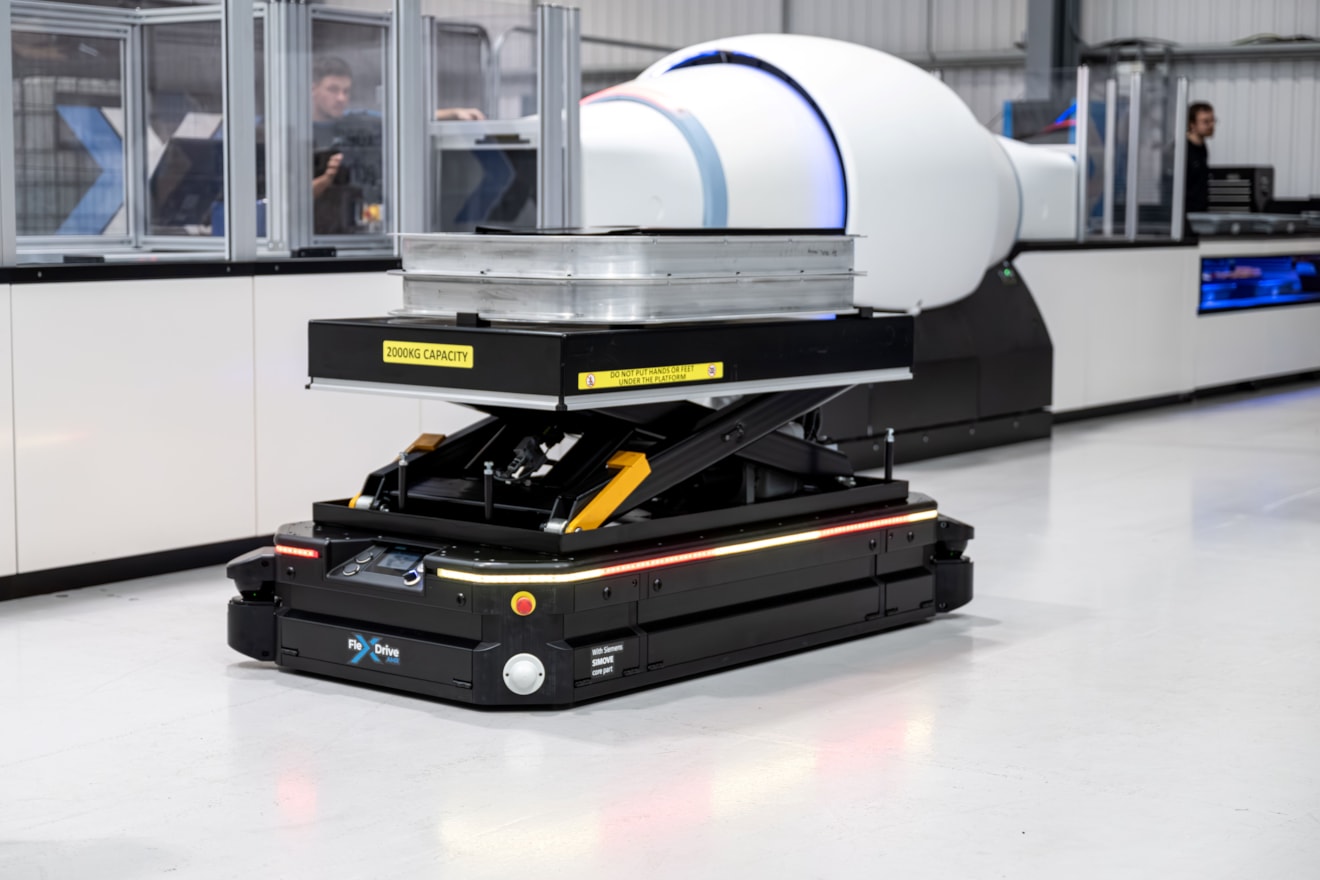
Tracoinsa System is now part of Expert Technologies Group which specializes in intelligent industrial automation and robotics solutions. MD Danny De Angelis continues:
“At Tracoinsa, we continuously invest in automation, smart design, and process innovation to improve productivity while reducing energy and resource consumption.
“Working collaboratively with customers, we have delivered intelligent control solutions that automatically shut down systems during periods of inactivity, significantly reducing unnecessary energy use.
“We have also redesigned systems to replace pneumatic components with electrically driven alternatives, improving efficiency and reliability by eliminating the high energy costs associated with compressed air. In parallel, recent product developments have removed the need for welding through modular, assembly-based designs, reducing manufacturing time, energy consumption, and fume generation.
“Customer involvement is central to these initiatives and plays a key role in accelerating the adoption of innovative, efficient manufacturing solutions.”
Role for government
Lee sees an important role for legislation in driving change.
“Ever tightening regulatory drivers such as PFAS restrictions, volatile organic compound (VOC) limits and carbon reporting compliance will continue to push tape manufacturers to adopt cleaner chemistries and product formulations in the future.
“The use of greener tape formulations will be adopted by customers for the less demanding customer applications and “easier to remove” adhesives can enable disassembly processes in markets such as automotive and electronic components.”
Danny agrees and says that legislation can help: “More Government support is needed both in the form of dedicated funding for workforce training and in the delivery of sustainability initiatives that enable businesses to effectively reduce their carbon emissions.”
References
‘Driving Decarbonization in automotive manufacturing: Executive Education as a Catalyst for SME Sustainability in the UK Automotive Sector’ was presented on Dec 4th 2025 at the “Sustainability in Executive Business Education Programmes”, it is to be published as book chapter as part of the “World Sustainability Series”, https://www.springer.com/series/13384 (end 2026)
What next for the global car industry? www.iea.org report
Supporting Sustainability – The Society of Motor Manufacturers and Traders (SMMT)
Siemens partner on UK’s first AMR
Johnson MP, Rötzel TS, Frank B (2023) Beyond conventional corporate responses to climate change towards deep decarbonization: a systematic literature review. Manag Rev Q 73:921–954. https://doi.org/10.1007/s11301-023-00318-8
Gennari F (2022) The transition towards a circular economy: a framework for SMEs. J Manag Gov 27:1423–1457. https://doi.org/10.1007/s10997-022-09653-6