Reflections from the R&D Management Conference 2025 “Innovation & Biodiversity”, by RADMA trustee Fiona Lettice, Professor Emerita of Innovation Management in the Norwich Business School, UEA and former Pro Vice Chancellor (Research and Innovation).
This year’s R&D Management Conference in Pisa opened in sweltering heat and with it, a sense of urgency fitting for its theme.
Over several days, I heard from R&D management scholars, industrialists, and policymakers grappling with a range of topics including:

People and Progress
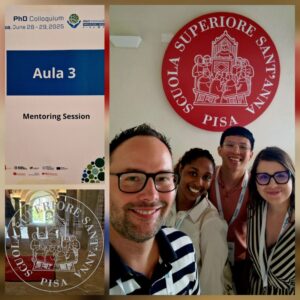
The conference began with the PhD Colloquium, which was exceptionally well organised.
The mentoring sessions were rigorous and constructive, offering invaluable feedback to early-career researchers. It was also a powerful reminder of the importance of supporting emerging voices in the field.
The field has grown substantially since the conference was founded, with participation growing steadily to around 500 participants.
The R&D Management Journal has also steadily grown and improved, now publishing around 70-80 papers per year and with an impressive impact factor of 5.7.
Friendly and inclusive
Despite this growth, the community remains friendly, inclusive and supportive and welcomes new voices and perspectives to push the field forward with fresh insights, rigorous research, and real-world impact.
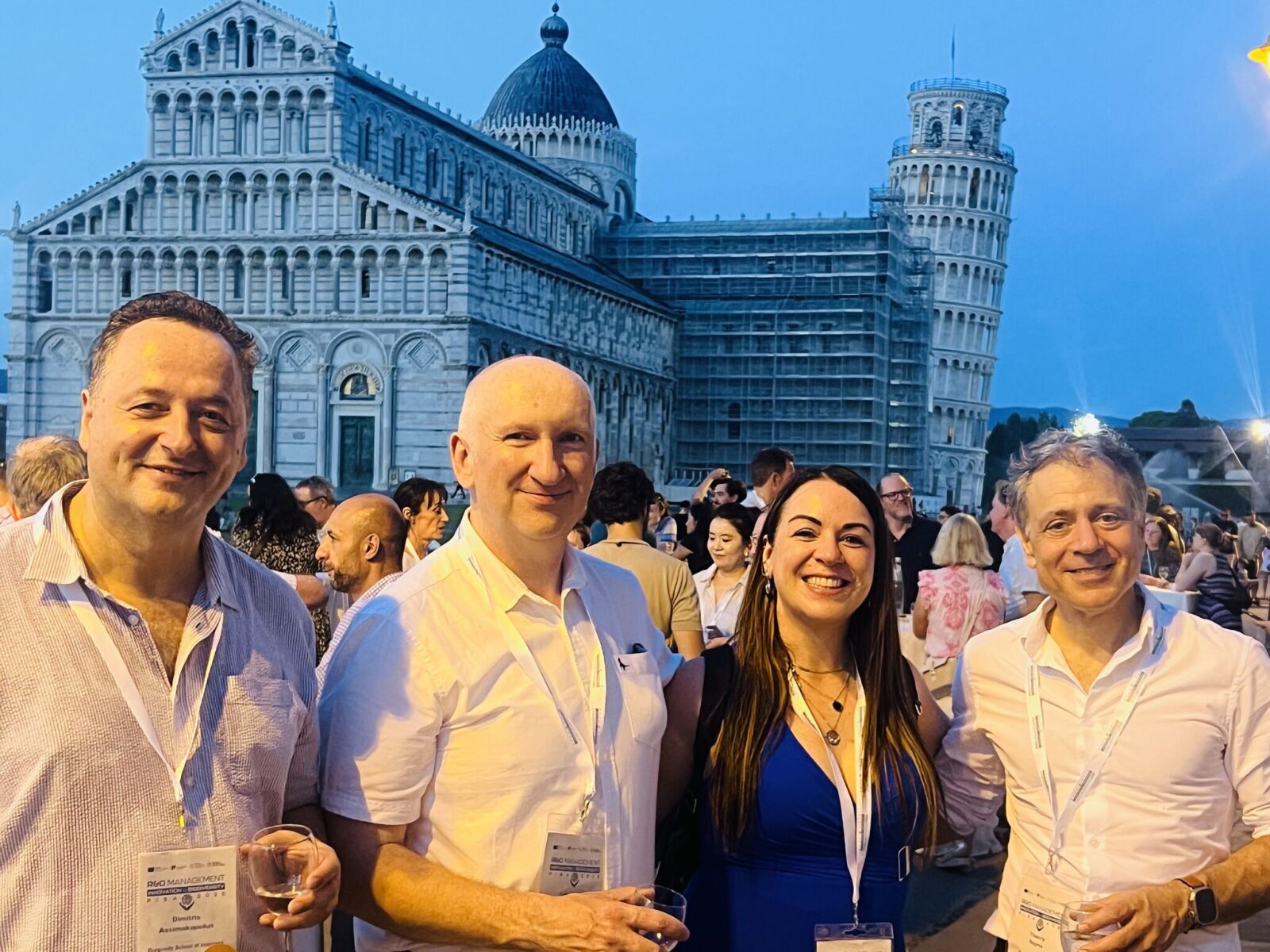
The conference was a welcome opportunity to reconnect with existing colleagues, meet collaborators in person, and forge new relationships.
The social and human interactions, facilitated by wonderful Italian hospitality, remain one of the most rewarding parts of academic gatherings.
From Grand Challenges to Systemic Change
The plenary session on the first day and the industry panel on the final day of the conference focused on the theme of Innovation & Biodiversity, providing rich insights from multiple perspectives on the topic.

Is biodiversity relevant to industry?
The question “Is biodiversity relevant to industrial innovation?” was addressed in keynotes from Maria Chiara Carrozza, President of the National Research Council in Italy and Enrico Giovannini, Scientific Director at ASviS, who both underscored how the biodiversity crisis intersects with economic resilience, and human and planetary health.
Carrozza emphasised that over half of global GDP depends on nature and highlighted the European Union’s Biodiversity Strategy and Nature Restoration Law as frameworks for transformational change. She made the case that biodiversity is no longer just a distant moral or ethical concern, it’s a systemic risk that threatens our future as a species. Her call to action centred on the circular economy as a powerful framework to shift production and consumption toward ecological balance.
Enrico Giovannini, Scientific Director of ASviS, spoke about complex systems and tipping points, noting how the world we’ve built is characterised by high risk and low resilience. He framed biodiversity as both a challenge and a catalyst for innovation. His challenge to leaders – to act in their term of office, not delay until the next was a resonant provocation for urgency and action.
Rising to the grand challenges
Panels featuring Markus Perkmann (Imperial College London), Caroline Paunov (OECD), and Federica Foglini (National Biodiversity Future Centre) explored how we build innovation ecosystems that can rise to biodiversity-related grand challenges. To address issues from antibiotic resistance to sustainable land and sea use, critical tools include interdisciplinary research centres, coalitions beyond academia, mission-based innovation, and citizen science.

But we must also rethink evaluation, funding, and incentives – otherwise these initiatives will not deliver what we need to address the grand challenges we face.
Biodiversity in Practice: Industry Insights
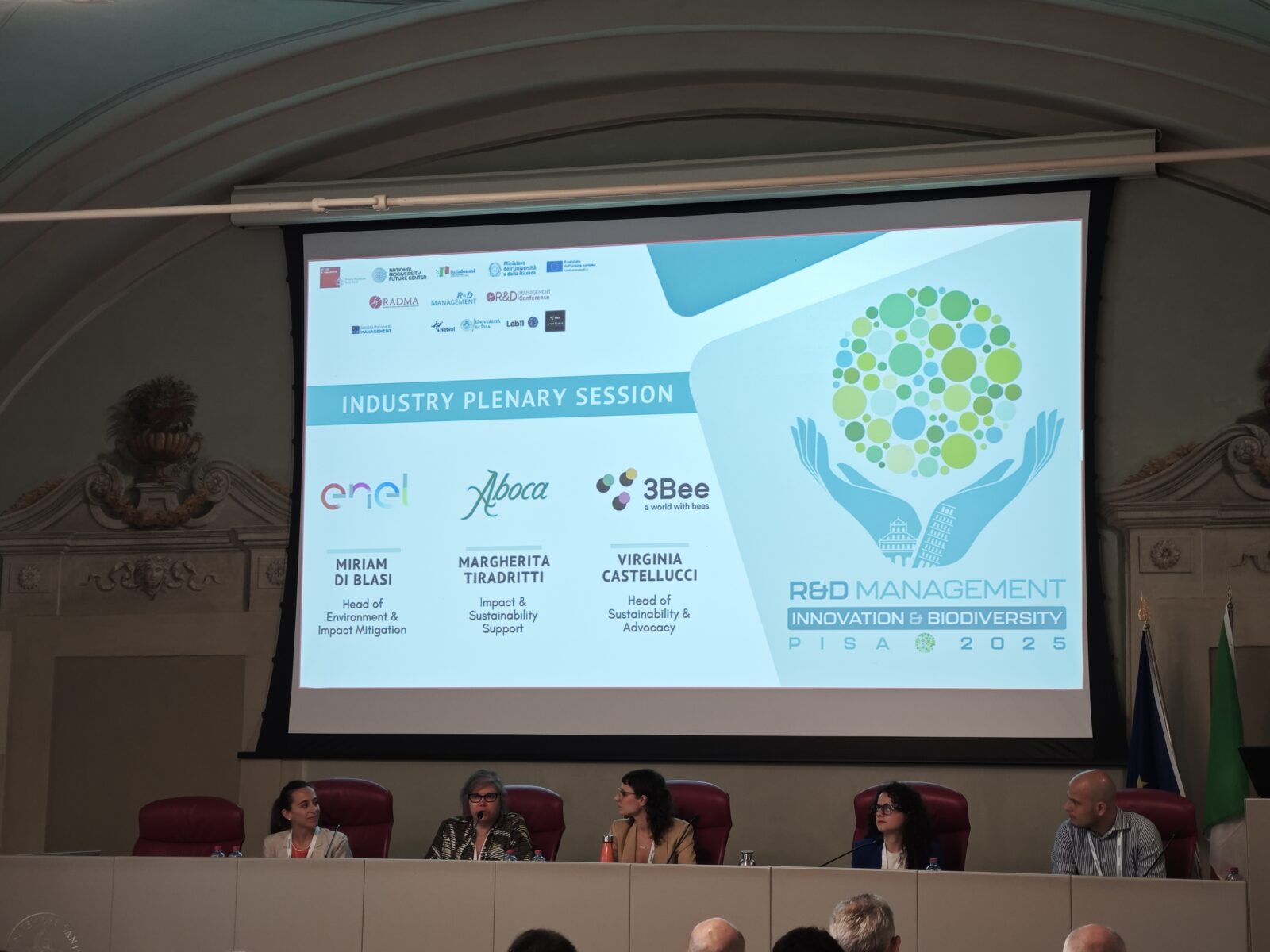
Miriam Di Blasi from Enel spoke of how they are integrating biodiversity into their open innovation model. With initiatives ranging from ecological corridors within solar plants to biosensors for tracking pollinator health, Enel treats the ecosystem as a stakeholder. Enel works with universities, startups, and local communities to pilot and refine solutions, to weave biodiversity considerations into the energy infrastructure, water management, and environmental risk mitigation. In one case, they partnered with 3Bee to increase pollinator presence by 75% in a solar facility.
Margherita Tiradritti of Aboca, a healthcare company rooted in organic cultivation, shared how biodiversity is not just part of their mission, but their entire business model. Cultivating more than 90 species under a 100% natural, chemical-free regime, Aboca exemplifies a circular, system-level approach where biodiversity directly underpins health, product development, and community engagement. Their newly launched Biodiversity Strategy (2025–2030) focuses on five pillars: Avoid, Reduce, Restore, Transform, and Educate.
Virginia Castellucci from 3Bee, a biodiversity tech startup, showcased how technology can empower biodiversity monitoring at scale. With IoT devices, satellite imagery, and bioacoustic sensors, 3Bee is now monitoring over 1 million hectares globally. Their platform helps companies and municipalities understand their environmental footprint, offering insights that can guide decision-making across fragmented global supply chains. This blend of accessibility, data richness, and scalability is what makes their model so innovative – and powerful.
Together, these case studies highlighted not only that biodiversity is relevant to industrial innovation, but that it is driving it. From compliance to competitive advantage, biodiversity-informed practices are helping organisations strengthen resilience and unlock new forms of value.
Not if but now
The question is no longer if biodiversity matters to industrial innovation, but how quickly and effectively we can adapt our systems to reflect this new reality. Across energy, healthcare, agritech and beyond, we are seeing the early signs of this transformation – but the road ahead will require a much more integrated approach to research, regulation, and investment.
A central question raised – both at the conference and by R&D Today – was whether biodiversity is relevant to industrial innovation. The answer is unequivocally yes and not only is it relevant, but it will define the future of innovation.