When Rick Mitchell became R&D Manager at Domino, the pioneering inkjet printing company, he recognised the importance of the People Factor. His work would later become a textbook example of successful innovation strategy.
His enthusiasm for innovation has been a life-long passion and RADMA has been enriched by his contributions as a Trustee.
Rick is now stepping back from this role, and his colleague and friend, David Probert, took the opportunity for a fireside chat to ask him about his career and his thoughts about the “People Factor” in R&D Management.
People skills as a superpower
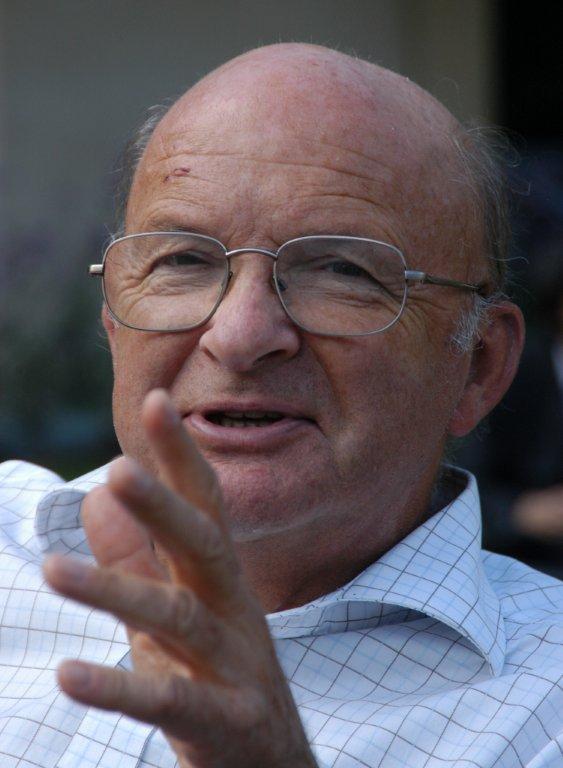
David first met Rick when he invited him to IfM’s Centre for Technology Management (CTM) to talk about technology development at Domino. David founded and headed up CTM for many years, and he later invited Rick to teach at the centre.
David says: “Looking back over Rick’s career, it is notable that he was headhunted for every promotion. He is a humble chap who values the input of others, and I think that these excellent people skills have been one of his great strengths as an R&D manager.”
David continues. “When Rick retired from Domino, we took the opportunity to invite him to teach at CTM. Teaching is multi-skilled, it is not just knowing your subject, it’s about how to communicate it and engage people. Apart from Rick’s many other skills, he is one of the best executive education teachers I’ve ever witnessed.
“Because he has done the job, his insights into the fundamentals of the subject come out of experience and research, but also with the benefit of real-world context – all delivered with warmth and humour.”
At the forefront of science
Rick is a Cambridge man, who was born (1943) and brought up in the city before studying natural sciences and physics at the University of Cambridge.
His father was a technician in the university’s Dept of Pathology workshop.
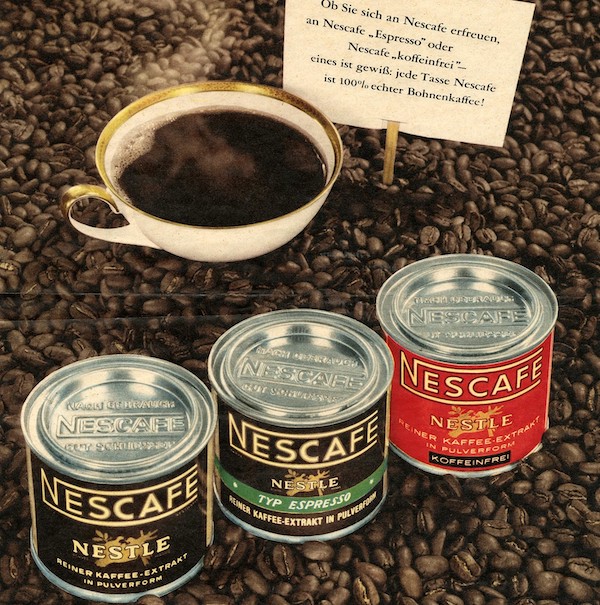
The department invented a way to freeze dry blood plasma for use in the second World War, a technique that was later used by Nescafe to make the first freeze dried coffee.
“I think this upbringing inspired my interest in science and innovation,” Rick observes. “My first job was in fundamental research at what became the Philips Research Labs in Surrey. While working on acoustic surface wave transducers and the use of filters, I discovered something that couldn’t be explained with the current knowledge. So, they invited me to do a PhD to research it further.”
Later on Rick was headhunted to join the Central Economics and Planning Department in London and to be assistant to Peter Trier, the Technical Director, who had previously run PRL.
Transformation from ‘walkie-talkie’ to mobile radio
Philips had acquired Pye Telecom in 1978, which was a developer and manufacturer of stand-alone handsets, known as ‘walkie-talkies’. The company had started radio manufacture in the 1920’s but could see that the future was in integrated telecom systems, and other parts of Philips had experience in this area.
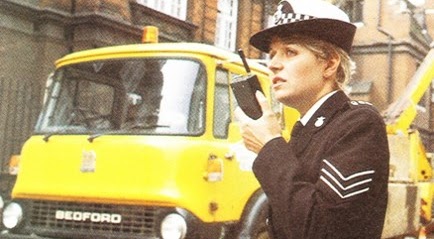
As Rick had some knowledge of radio, he was asked to head up a team to make a proposal to the Pye Board of how the disparate departments could work together on this vision. His presentation went down well, and he was told, “if you believe this stuff then perhaps you can run the new department for us?”
He took up the challenge and moved back to Cambridge in 1981. At Pye he was asked to manage and coordinate experienced engineers with limited domain knowledge of his own.
Q. How did you get these engineers, each with very different skills sets, to work together?
“My experience was not very great, so I asked them what I should do. It was great fun, and I knew that I was doing something useful, because if there was an issue people would say ‘you’d better ask Rick’.”
The integration was successful, and the company was renamed Philips Radio Communications Systems (PRCS) in 1986.
After some time in PRCS he was approached to see if he might be interested in the position of R&D Manager at a Cambridge company called Domino.
A disruption in the printing industry
Rick joined Domino at an exciting time in its development. From R&D Manager he was later invited to take up the position of Technical Director and oversaw innovation at the company as it became a world leader with its disruptive continuous inkjet (CIJ) technology.
Until the development of CIJ, it was difficult to print on moving objects. The founder of Domino, Graeme Minto, had been researching multi-jet printing and saw a huge commercial opportunity within packaging and logistics.
His employer, Cambridge Consultants, had a philosophy of soft-starting promising technology companies. So, after developing a successful prototype, Minto spun-out Domino, developing and launching the first printer in 1979.
A big break came with the 1980 EEC Directive for Product Identification, which introduced the labelling of perishable goods with ‘best before’ and ‘use by dates’ – a task that would be difficult to achieve on moving objects.
Soon after Rick joined the Domino Board it saw the potential of laser technology to improve the solution. “You could mount a small laser above a moving belt and perform non-contact printing on the labels. The process was very fast, up to a metre a second, nothing else could achieve that speed.”
They identified a small company in California with this technology and built a relationship with the entrepreneur, Lee Sutter.

“Lee Sutter, of Directed Energy, was the originator of the of laser technology, but this knowledge was largely in his head,” Rick recalls.
So, to enable Domino to acquire the technology, Rick built up a relationship with Lee that was to become a life-long friendship.
“You even took up golf!” remembers David.
“Yes, it was important to build up trust, because why would he want to give up control of his own business to link up with a foreign owner?” Rick explains. “I used to commute across to California once a month or so, to support Lee and oversee the team out there.”
This people-focussed approach meant that the acquisition was successful and the guy with the knowledge stayed with Domino and continued to innovate.
Innovation culture
David reflects that Rick’s inclusive approach was an important element behind the ability of the company to successfully integrate new technologies (and their developers) as it supported a culture of innovation at Domino.
David says: “We have seen many acquisitions of exciting technology start-ups fail as the people factor has been poorly handled.
“Creative innovators often lose their motivation if the acquiring company has an authoritarian, top down, management style and the best people often leave to start something else.”
Some big questions for Rick
Q. As Domino grew and diversified how did you keep innovators like Lee on track?
“Well, I was now technical director and responsible for contact with the teams and making proposals to the board.
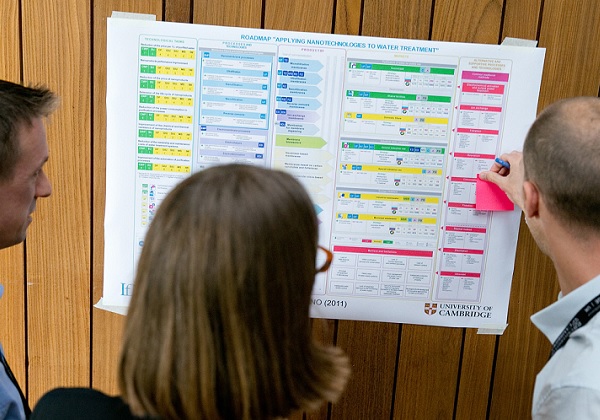
“My approach was to get everyone involved in technology road mapping. IfM was pioneering a new way of doing road mapping in a project that David was heading up and I became involved as an industry partner. With a roadmap, everyone can see the vision of the company and how their project fits within it and this keeps them on track.”
Q. What makes a good R&D Manager?
“It is all about people. You need sufficient knowledge to understand the technology, but I think it is important to go around and talk to people and value their input.
“Getting them to explain the problem is also a useful way to assess their level of knowledge, and if they can see the bigger picture and where their project fits in.
“Politics also comes into it. You need the skills to accommodate the person in charge and to work well with them and support their vision and the business objectives.”
Q. What are the big challenges for the future?
“It’s got to be AI, obviously the workplace is going to change, and some types of job will be at risk, but also others could be more powerful with the benefit of AI tools.”
Rick’s living legacy – a greater understanding of the People Factor
Leading innovation isn’t about having all the answers — it’s about asking better questions, enabling creativity, and turning ideas into impact.
Many cohorts of students have benefited from Rick’s generosity in sharing his learnings and experiences.
For some this has been in person; Rick was appointed Royal Academy of Engineering Visiting Professor of Innovation to the Engineering Dept at the University of Cambridge, and also a Professor at Cranfield School of Management.
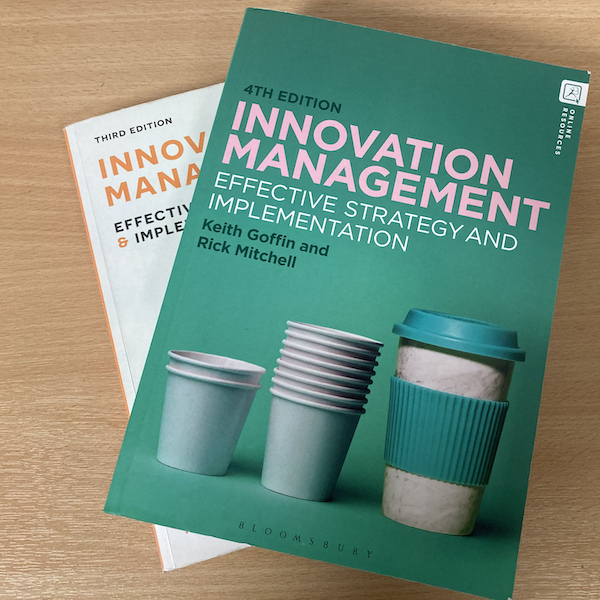
For others it will be via his textbook. It was at Cranfield that Rick met Keith Goffin, and the two have collaborated on a seminal textbook entitled simply “Innovation Management” which has been recently released as a 4th Edition.
So even those not fortunate enough to be taught by Rick can benefit from his knowledge.
Reference
Innovation Management – Managing innovation is like competing in an Olympic Pentathlon, excellent performance in one sport will not win you the medal.
This textbook explores how top performance in 5 key areas-ideation, prioritization, implementation, strategy, the people factor and organization-is essential to success in today’s ever-changing business landscape.
The People Factor in innovation management
The Cambridge Phenomenon – a successful example of an innovation ecosystem.