Despite a staggering level of annual investment in product innovation, billions are wasted globally, are they missing the recipe for successful innovation?
Guy White, founder of innovation consultancy Catalyx, probes why such a colossal failure rate persists—especially in Fast-Moving Consumer Goods (FMCG).
He looks at the lack of scrutiny applied to current innovation development approaches and delves into the common pitfalls brands face. He explores effective strategies that can significantly improve the success rate of new product introductions and argues that it is possible to make the success of innovation entirely predictable.

One in four products fail within a year
The ONS recorded an expenditure of £791 million on innovation R&D for the Food products and beverages product group in 2023. Yet, an analysis of new product launches in key FMCG categories during 2023 and 2024 showed that an astonishing 25% were inactive by the end of 2024 (Euromonitor, 2025).
This is supported by research at the Ehrenberg-Bass Institute, which investigating 83,719 new product introductions over an eight-year period, finding that around one in four new products failed to survive one year after launch. This failure rate increased to around 40% two years after launch.
Does it meet a consumer need?
When a product flops, the blame often lands on poor retailer negotiations, supply chain snags, or ineffective marketing. While these factors play a role, the fundamental truth is that a product’s survival is determined by whether it genuinely solves a consumer need.
A product’s ability to survive is not merely about its stated function; it’s about a deeper connection:
- Does it tap into current desires?
- Does it solve a hidden tension?
- Does it deliver greater perceived value than what already exists?
In FMCG, where consumers are bombarded with choice, loyalty is hard-won. The ultimate measure of a product’s success is how often consumers pick it up and repurchase it.
Limitations of focus groups
Even brands that are consumer-centric and invest heavily in research such as focus groups and surveys still launch products that miss the mark. The colossal failure rate persists because many brands rely on old-fashioned methods that barely scratch the surface.
Surveys and direct questioning only reveal surface-level insights; they don’t tap into the emotional and psychological drivers that create category-disrupting products. This is the well-documented “say/do” gap.
Uncover hidden tensions
For true breakthrough innovation, brands must uncover ‘hidden tensions’—those unspoken compromises consumers have accepted as ‘just the way it is’.
Coffee capsules, for instance, offered consumers the indulgence of high-quality coffee at home while removing the mess of grinding beans or cleaning filters. This solved a friction point few consumers had even articulated, but none the less appreciated.

Creating a recipe for successful innovation
It is possible to make the success of innovation more predictable by adopting a structured, evidence-led approach focused on building better products, not just testing them. This process involves three core stages: identifying desire, defining the ‘recipe’, and bringing it to life.
- Identifying Desire: This begins with deep consumer insight discovery to uncover the ‘Jobs to be Done’—the underlying reason a consumer is buying the product. It involves identifying the Tension, Benefit, and Permission: the unspoken compromises (tension) or gaps preventing current products from perfectly delivering on the required jobs.
- Defining the Recipe: The focus shifts to crafting the perfect recipe card—a set of attributes (e.g., pack design, ingredients, claims, and price) to transform the innovative idea into a compelling consumer product.
- Bringing it to Life & Validation: The final stage is turning this blueprint into a winning product idea, followed by rigorous validation to ensure the product delivers on its promise.
Going beyond test marketing
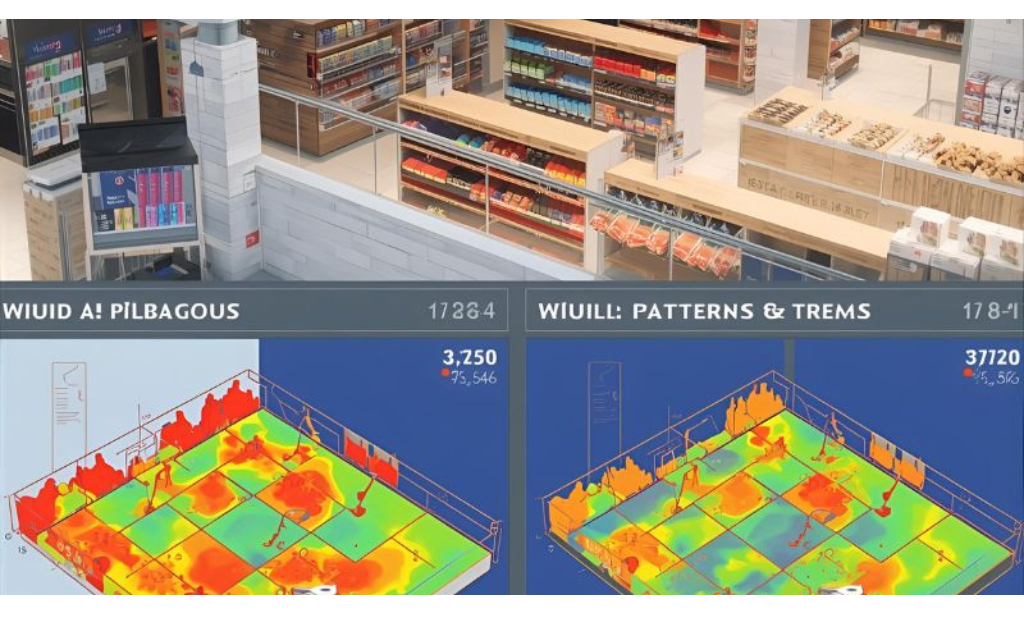
The validation should extend to measuring in-market potential. For disruptive innovation, this means going beyond traditional test marketing, which can expose new ideas too early. Instead, it involves leveraging simulated consumer shopping behaviour. This can be achieved through simulated online retail environments or virtual reality (VR) store simulations that mimic the real-world purchase decision process.
Consumers are placed in a realistic digital shelf-set (the simulated shopping environment) where the new, disruptive product is positioned alongside existing competitors. The key is that the consumer is tasked with making a purchase decision, not just giving an opinion on a concept.
Removing obstacles before launch
This validation process can result in unexpected findings that can help change the direction of the innovation before it’s too late. For example, a company might be launching a highly concentrated dilute drink product presented in a small size format. Traditional research might demonstrate high consumer interest in the sustainability benefit of a smaller pack size.
However, a simulated shopping study may reveal that consumers are put off by the unfamiliar, small size in the aisle, perceiving it as a lower-value for money than the larger, familiar bottles of competitors.

In this case, the simulated data can pinpoint that the pack design and shelf position (recipe card attributes) need to be drastically altered to communicate the premium concentration and value before the sustainability message even registers.
Articulating a recipe for successful innovation/
If brands take a structured, evidence-led methodology it will ensures success by design, moving closer to making the success of innovation predictable.
About the author
Guy White is the CEO and Founder of Catalyx, a multi-award-winning consultancy that helps clients build better, more innovative products.