It is estimated that 50 percent of software projects fail to meet their expected targets. If meeting targets is the primary measure of success, this would imply only 50% of projects succeed. Is a focus on meeting initial targets under valuing success in R&D?
Valerie Lynch, founder of AND Technology Research, argues that a better measure of success can be found by looking at the value created by R&D projects:
“Project work is difficult to estimate due to the uncertainties and ambiguities involved. Yet, success and failure are often judged on whether estimates were correct rather that what was achieved in the time and budget invested.”
She discusses how the greater use of value-based models geared to the achievements of the engineering team may give a more insightful indication of the project’s contribution.

People can make the impossible posssible
People, she observes are the critical factor in the success of a project.
“Firstly, people are required to design the project plan and define the estimates. Thereafter the team must execute the plan. Whilst the hope is that everything goes according to plan, ambiguity and uncertainty mean that what seemed possible, can easily become impossible”.
She explains that the team can often change the impossible to the possible through agile working and judicious changes of plan. But such changes can be judged a failure because they did not meet original expectations on features, time and budget.
“Failure to meet feature expectations occurs mostly when the technology is immature or there is limited time in the plan to develop a tested robust solution. Engineering schedules can easily overrun in the quest to turn the impossible into the possible.
“Furthermore, if schedules cannot be extended the project will fail even though the project team may have uncovered technical challenges which, if solved, could provide competitive advantage”.
“Greater use of value-based models geared to the achievements of the engineering team might give a more meaningful metric for measuring the contribution of projects to the business,” Val comments.
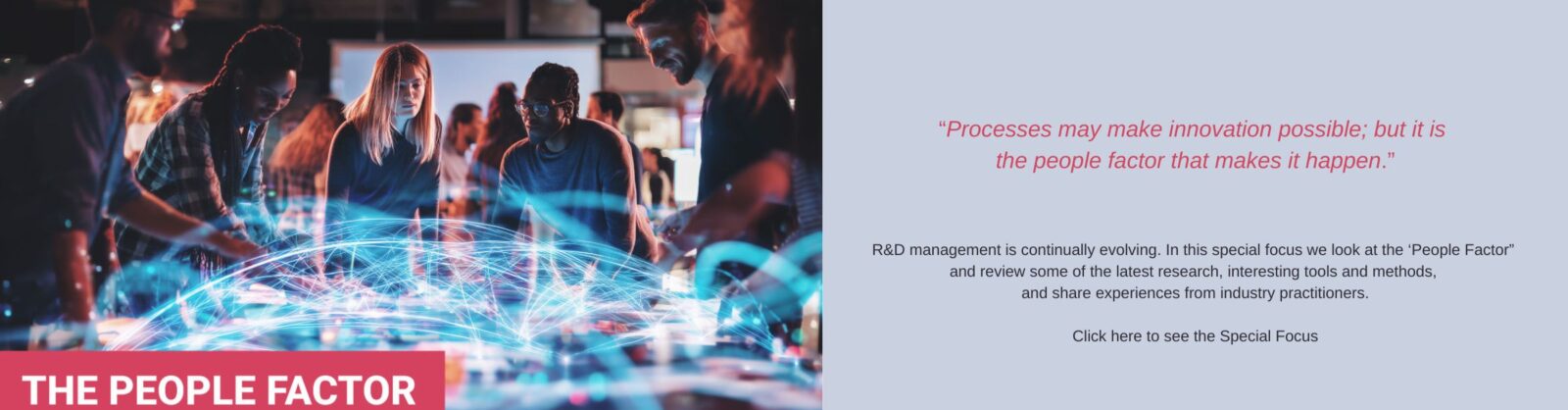
Are we under valuing success in R&D by missing the people factor?
As part of her PhD thesis, “An investigation into the Value of Embedded Software”, Val studied literature relating to teams involved in R&D that contained a software element. She has combined this with her own R&D experience, to make a number of observations about the contribution of people to the success of projects.
Recruit the right people
Based on her experience of leading and managing R&D projects, Val suggests that the first step is to gain an understanding of the team required to deliver projects.
“As experienced individuals are often more productive, in the early stages of a project there is a tendency to select those with more experience, but they may lack the skills required”.
“R&D projects are often multi-disciplinary. Emphasis on recruiting the right people in the first place will ensure the teams have the full range of capabilities required,” observes Val. “Expertise to cover each discipline is a given, but other skills are required. Originality is required to develop new concepts and importantly skills in critical thinking have been shown to improve practical outcomes.”
“Good teams, in my experience, are those that are goal oriented. The best teams are those that know what range of skills are needed and are able to self-select for the capabilities required. Such teams build a transactive memory meaning they understand each other through actions as well as words. They innately understand why colleagues act in certain ways as well as what each other are doing”
Align motivations with business objectives
Engineers are often motivated by projects that involve challenging problem solving.
Engineers can become demotivated or sidetracked on personal projects if they are not able to gain experience in new tools or technologies within the workplace.
Val suggests “To create most value for the business, R&D projects and teams should be matched so that the team members can gain experience whilst also aligning to business objectives”. Achieving this, she observes is not easy but she explains that for the company to capture the most value from their people it is important that the leader takes an interest in the work of the teams whilst also displaying trust.
“Once the team is formed, the leadership need to give the team autonomy and the freedom to improvise to find the best solution alongside channels through which the status of the project and the value of their work can be captured”.
Ask the right questions
Project management techniques abound with communications methods but the abstract nature of many R&D projects, particularly of software engineering, can make it difficult for others not intimately involved in the project to comprehend. This can lead to management under valuing success in R&D.
“Despite the implementation of communication channels, I have often observed that management can have a poor understanding of the status of a project. This limits the ability of management to communicate effectively with engineers”.
“For example, too often leaders are concerned with the time and project management rather that what the engineers are creating.
Asking the question, ‘What value do you think you can create?’ Rather than ‘how long will this take?’ I have found to be great way to align the work with business objectives and understand the value being created”
Val suggests that communication challenges can be overcome by developing a common language that all parties understand. Time and the engagement of senior management is required.
Use AI to complement capabilities and learning
Potentially the speed and accuracy of code development is an area where AI will have a significant productivity benefit, particularly by allowing improved simulation and testing.
Val agrees that AI does have impact here: “AI is a great tool for generating code. Human input and intellect are however still needed to decide what code is generated, and how the code will fit within a system. There is no doubt that that AI will produce productivity savings.”
“As will all new technology, some skills will not be required in the volume they once were, but other skills will be required. For example, skills to ensure that the AI generated systems are correctly aligned with goals are required.” Experience of managing AI generated software systems has led Val to observe that a stronger emphasis on software design and design of how the AI tools will be primed and used is now required.
Learning points for practitioners
Experiential knowledge gained from practical experience, and supported by a review of the literature, concludes that communication matters not only from an operational perspective but also from a human perspective.
Val comments: “Open communication between team members leads to diverse discussion and clear debate, promoting learning. This is the major contributory factor for achieving success and has a positive effect on company value.”
The key points to emerge from literature research are:
- Teams that grow organically and combine diverse experience appear to be more productive.
- Capabilities, competences and the ability of individuals and teams to learn are factors that can increase company revenue.
- Targeting rewards to the individual’s motivations improves the outcomes.
- Teams where communication is rich in data and debate improve the project outcomes and the value to the company.
- Engagement of all stakeholders (including directors and managers) has an impact on value.