On February 1, 2003, as the world watched in horror, the Space Shuttle Columbia disintegrated upon re-entry into Earth’s atmosphere, taking the lives of seven astronauts.
Investigation revealed a deeper, systematic organizational problem beyond the technical causes. NASA reponded rapidly and by 2006, JSC leadership articulated a new narrative known as the Business Imperative.
It reframed innovation as essential to mission success rather than a peripheral activity. Every new mission would demand novel approaches to technology, partnerships, and problem-solving.
This four part series of posts explains the process it followed and the outcomes, which are widely applicable.
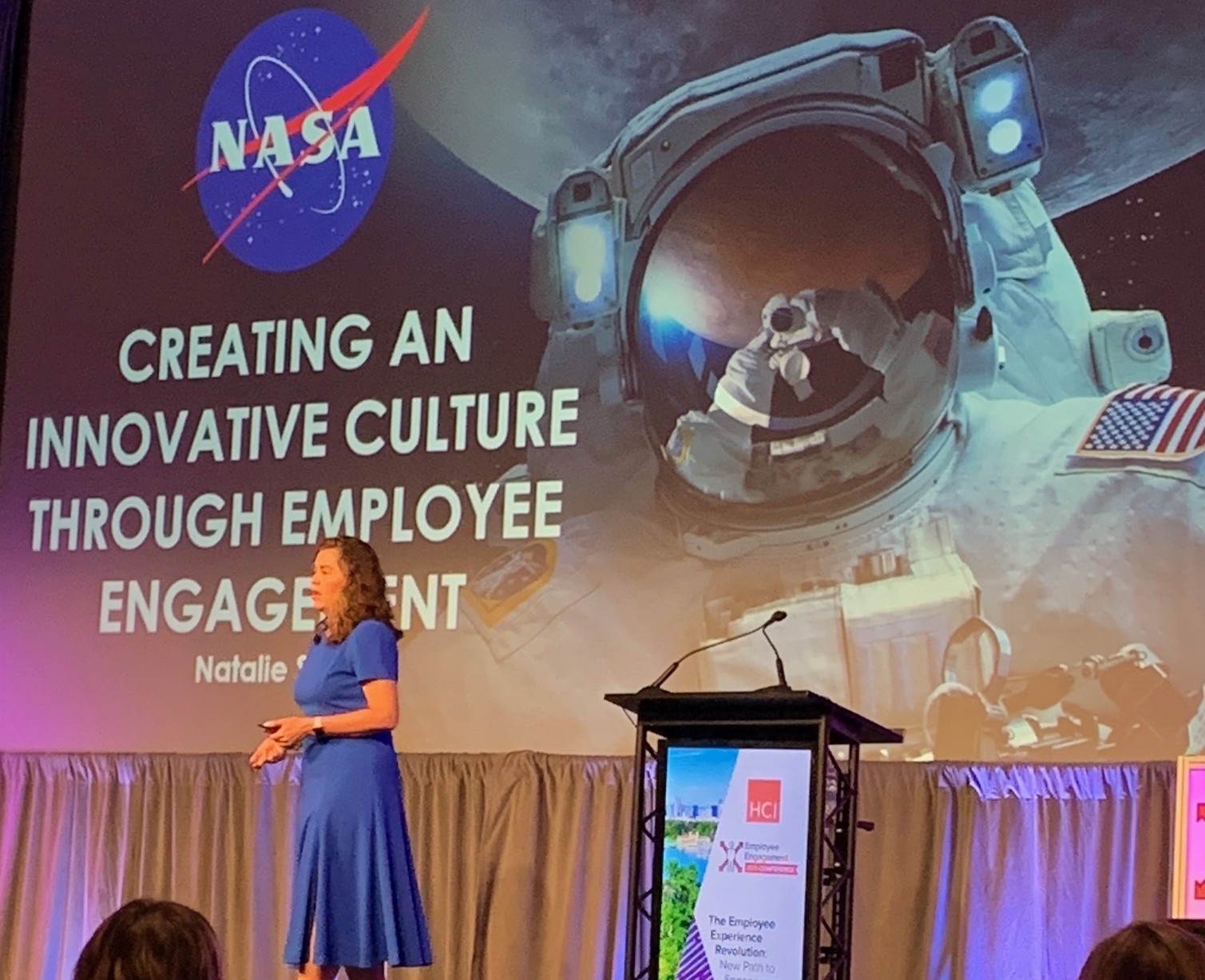
Practices and Processes: Embedding innovation into the system
As the culture evolved, JSC recognized that sustaining innovation required systemic reinforcement. Policies, procedures, and incentive systems had to align with the new cultural expectations.
Revamped mentoring program
One of the earliest reforms was the creation of a revamped mentoring program called YODA – Your Opportunity to Develop Another, which was designed to bridge generations, disciplines and organizational levels. YODA reimagined mentoring (Do Nascimento Gambi & Boer [2015]) as a mutual learning partnership rather than a one-way transfer of expertise. Senior engineers and scientists provided technical insight and institutional wisdom, while early-career professionals offered new perspectives, digital fluency, and creative energy.
The program emphasized curiosity, humility, and inclusion, encouraging mentors and mentees alike to explore diverse approaches to problem-solving and leadership. In practice, YODA became more than a development tool—it was a mechanism for rebuilding trust and communication across the organization.
By pairing employees who might never otherwise collaborate, the program reinforced the belief that everyone at JSC had something to teach and something to learn.
Team recognition and work-life balance
JSC also redesigned its recognition programs, shifting focus from individual heroics to team collaboration and knowledge sharing. Awards began to highlight cross-directorate achievements and innovations that improved safety, efficiency, or inclusion.
In parallel, work-life balance initiatives acknowledged that sustained innovation depends on employee well-being. Flexible work arrangements and wellness programs became part of the strategy to maintain high engagement and creativity.

JSC’s innovation infrastructure
Perhaps the most visible symbols of change were JSC’s creative spaces – open, flexible environments for brainstorming, prototyping, and interdisciplinary collaboration. These include:
- The Sandbox – Chief among these was the JSC Sandbox, a physical and cultural hub for experimentation and rapid innovation. The Sandbox provided tools, materials, and support for individuals and teams to test ideas, prototype concepts, and collaborate across organizational boundaries. It was intentionally informal and accessible – designed to lower barriers to participation and make innovation feel hands-on, not hierarchical.
- Story-telling opportunities – In addition to physical spaces, time was set aside for story-telling opportunities such as the annual Innovation Day, “brown bag” seminars and Tech & Tell events which provided avenues to discuss lessons learned, and celebrate ideas and projects.
- Open innovation capabilities – NASA@Work and the NASA Tournament Lab, invited employees and external partners “beyond the fenceline” to co-create solutions.

Next steps – the Innovation Culture Framework
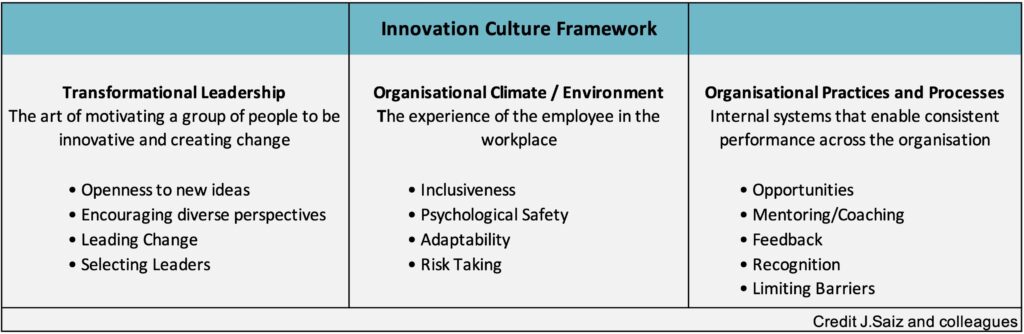
Together, these initiatives formed the third pillar of the Innovation Culture Framework: Organizational Practices and Processes, demonstrating that structural alignment is critical to embedding innovation into daily operations.
This learnings would later become the Innovation Culture Framework (Saiz, et al. [2021]), a recognition that leadership behavior, workplace climate, and organizational systems together form the foundation for sustained innovation.
References
- Do Nascimento Gambi, L., & Boer, H. 2015. “Strategy, culture and innovation performance.” Proceedings of the 16th International CINet Conference on Pursuing Innovation Leadership (Vol. 16, pp. 325-337). Enschede: Continuous Innovation Network.
- Saiz, J., Saiz, N., Denton-Misfeldt, D., & Wooten, K. (2021). How Culture Affects Innovation in an Organization. Strategic Technology and Innovation Management (STIM) Consortium, University of Cambridge Institute for Manufacturing.
Contributors and more information
John Saiz , Natalie Saiz and Michael Coats
If you would like to discuss the Innovation Culture Framework in further detail and/or would like to improve the innovation culture in your organization, please contact John Saiz [email protected]