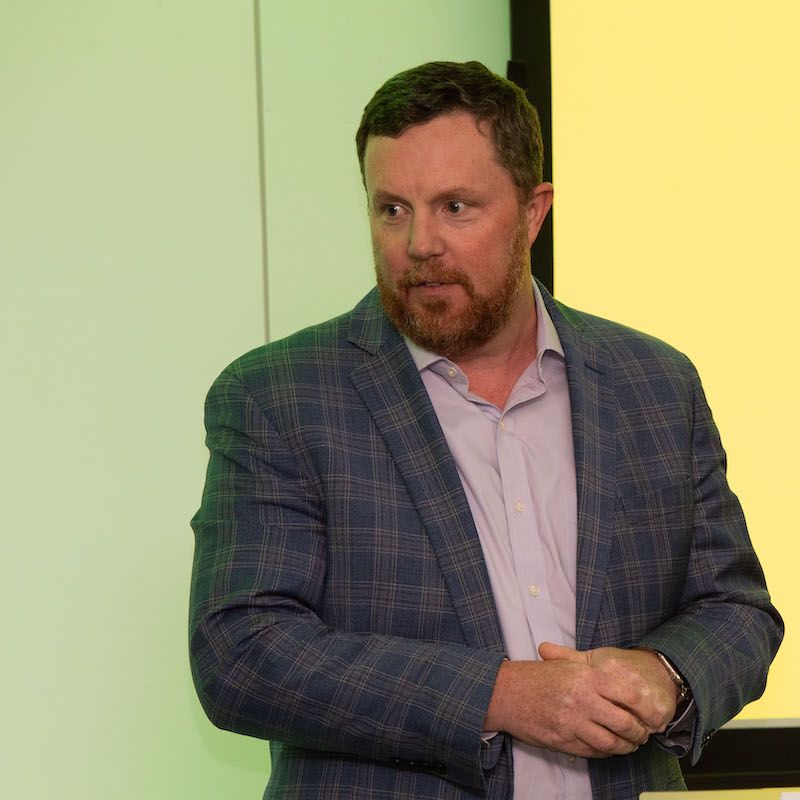
R&D leadership is under pressure to cut costs and increase the rate of innovation. Michael Hughes, Strategic Advisor and Chair of Nelsons, says that it is possible to make R&D thrive in a rapidly changing and high pressured environment. He offers some practical examples of tools that you might find useful.
Michael started his career at P&G becoming the youngest plant manager in the firm’s history. He has spent three decades working across health and beauty, most recently as CEO of Elevation Labs where he doubled revenue and tripled EBITDA, culminating in a highly successful private equity exit. He now offers executive coaching, board advisory and M&A support.
Some practical advice to make R&D thrive
I have met many young R&D professionals who have had six different bosses in the last three years! That creates a lot of turmoil for teams who are trying to drive an innovation culture, while keeping costs down and increasing productivity.
So, I have been asked to talk about how to make R&D thrive in a rapidly changing and high-pressured environment and I will share some practical examples of tools that may be useful as you tackle some of these landscape changes.
Need to cut costs? The aeroplane model can help you to keep control
Many of us have experienced a knock on the lab door and the instruction that we need to take 20% out of our costs in the next few months. Most people flip around to headcount reductions and that is never a comfortable conversation.
My advice, and the tool I would recommend, is what I am calling the aeroplane model. This is about being proactive and managing your costs in such a way that you’re in control of the situation.
One in one out
I first came across the aeroplane model when I was working for P&G in Andover in what was originally a Gillette plant. Everybody was absolutely drowning under all the systems and we were told to reduce costs and increase productivity.

I had watched a documentary on how to design the next Boeing 737.
The thing that hit me were the design rules. The engineers were told if you want to add it on an extra sensor or gadget, you’ve got to take something of equal or greater weight off the plane. That makes a lot of sense for an aeroplane that’s got to fly, soar and thrive.
Applying the aeroplane method at P&G
The next day I got all 200 people into a room and modelled out how we could launch the aeroplane model, using the philosophy that “no manager is allowed to ask you to do anything extra without taking something equal or greater in time/effort off your plate.”
We kicked off the exercise by rewarding people for simplifying work and improving processes. As a result, our productivity rose by 30% and morale went up.
We went from being the worst in the US (out of 30-something plants) to the best, in a very short space of time.
Taking off at Elevation Labs
Michael applied the same model when he became CEO of Elevation Labs, a rapidly growing innovator and manufacturer of beauty products for many high-end brands around the world.
Elevation Labs, was my first time being responsible for R&D. I walked into the lab and saw the staff were facing too much demand on their time. We were falling behind and needed more people. But in order to increase the headcount, I would need growth.
So, I introduced the aeroplane model. The team looked at every process and considered how to simplify it.

What we discovered was that lab chemists – well-trained, innovative people – were spending most of their time in the warehouse trying to create samples. They would try to find somebody to go up 5 racks and bring down a box of chemicals, so they could take 20 grams out of it to create a sample.
Only to find that the box, containing the 17th ingredient they needed for the batch that day, was empty. After all that effort they had to start again
Using aeroplane model thinking we redesigned the process and hired one person to pre-stage all the raw materials every day. Now the lab chemists came in each morning to find three colour-coded boxes containing all they needed.
It tripled their output – and we didn’t need to add more people.
A super organized lab helped us really increase growth over the coming years.
The aeroplane model enables leadership to take control of their own destiny. Understand the processes, work out how to simplify them, and you can stay in control of the cost.
How to prepare for future M&A and profile the value-add of R&D
Innovation can increase the company valuation
Last year I was involved in a 1.1 billion pound deal, and the challenge for the finance folks was trying to work out “will this innovative company offer a premium to the valuation?”
A company might sell for 10 times EBITDA, but if it’s innovative, this could increase to 12 or 14 – in the case of Elevation the valuation was more than 18 times EBITDA.
How does a finance person work out if the company is innovative?
They want to see numbers, so what are the KPIs they need?
I was involved on the selling side and at the last minute we tried to generate the numbers and KPIs, the finance guys needed. It is very hard to go back two years and work out how many lab batches we made, how successful it has been etc etc.

So, my recommendation is to start now tracking some critical KPIs, that will be cared about at point of sale of your company… whether or not you think you’re going to be sold.
It drives accountability and creates good visibility for the value-add of R&D.
Too often we focus on internal KPIs that are process driven. The question is are we winning with the consumer. Are you getting new briefs to launch? How many are technically successful? How many launched well with the consumer? Why did technically good products fail with the consumer, was it a pricing issue?
You will get asked those questions, having them ready to go, will help your boardroom see the value add that the innovation department can bring to the company.
Create a culture of innovation to ride out leadership change
You are never going to control the constant churn of leadership, but if you really have a very strong culture of innovation, the next leader that walks in will not dare touch it or mess with it. And they will more likely embrace it.
What does a real innovation culture mean? Innovation is not just the R&D department, it needs to permeate throughout the organization.
Ways to build a strong culture of innovation.
Introduce ‘Innovation Fridays’
Once we got organised and increased productivity, there was time on a Friday to think about innovation and get other departments – finance, manufacturing – that interact with R&D along to take part.
The best sessions were where we brought in an external partner to give their perspective. Create a consumer panel and let these people hear what they’re frustrated with, take them out to a store and see what the competitors are doing, and the type of packaging are they using. Get them to use your products. By encouraging their cooperation and participation, and they’ll become part of the innovation program.

Celebrate failure
Something I have learned is that R&D people suffer from one of the seven deadly sins, pride. And pride is a great thing until it isn’t a good thing.
People in R&D do not like sharing their failures. If they’ve made a batch that falls apart at the lack of instability, the instinct is to hide it away. Not to talk about it.
So, instead of everybody else having to learn that same mistake, one at a time, and let it really damage our business and reputation with customers. We created a ‘failing forward’ culture. When you do one of those failures let’s share it.
We created one-pagers to capture the problem and shared them, we gave out awards for those who failed the best this year, who shared the best, who got it out there, and that allowed people to open up and learn faster from each other.
Recognising success in a systematic way
People are so proud of the products they have created and it takes a team to do this. So have a wall of fame and if you have a successful launch put that product up there.
Let people really celebrate and recognize each other’s contribution for that. It’s very simple thing to do with a high intrinsic value.
My encouragement to you is that maybe there’s one or two nuggets here that you can use to make R&D thrive. Jot them down. Go back to the office or the lab tomorrow or Monday morning and go take action.
Resources
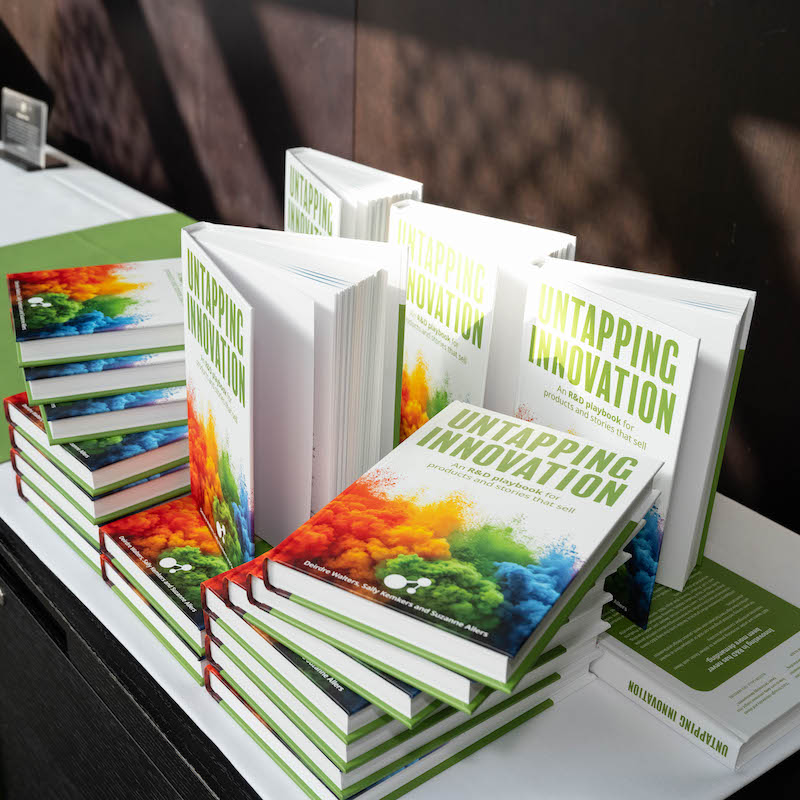
Michael was talking about how to make R&D thrive at an event hosted by Untapped Innovation to celebrate the launch of their book.
The aeroplane model is inspired by Peter Druker’s theory of Planned Abandonment – out with the old, in with the new.
Drucker recommended that all existing products, services, processes, markets, end uses, and distribution channels need to be assessed on a regular basis. He also observed that by keeping a declining product, service, market, or process, the new and growing product or market is stunted or neglected.