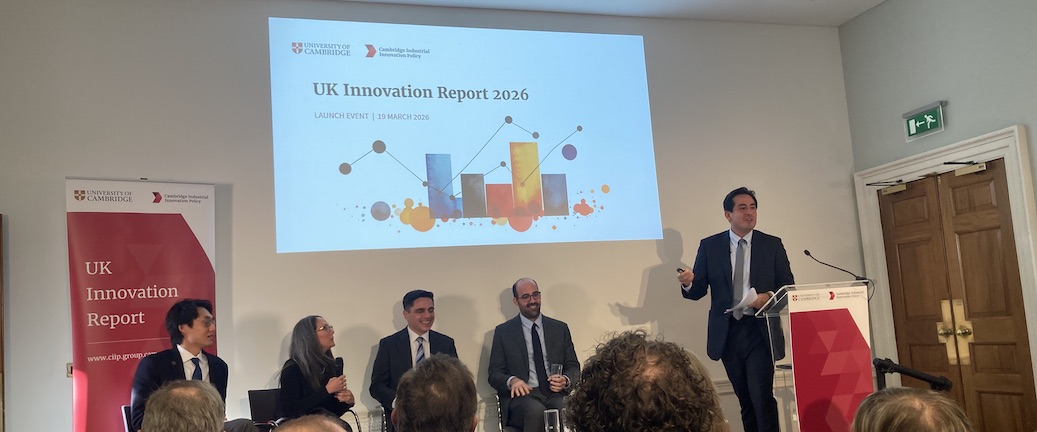
A dramatic restructuring of the global economy requires an innovation strategy that is focussed on increasing the competitive advantage within sectors, Lord David Sainsbury observed at the launch of the UK Innovation Report 2026.
The report benchmarks the UK’s industrial and innovation performance in a global context.
It was produced by Cambridge Industrial Innovation Policy group based at IfM (Institute for Manufacturing), University of Cambridge.

Innovation must connect to sectors that can scale
Lord Sainsbury explained that the classic economic model, which associates higher investment in R&D with greater market efficiency and economic growth on a national level, needs refining. Instead, he proposes that the focus of innovation strategy should be on creating competitive advantage within sectors.
He argues that firms within the same sector face the same competitor challenges – but that these are different for other sectors. For example, the challenges facing advanced manufacturing in aerospace are not the same as advanced manufacturing in pharma. Additionally, sectors grow at different rates depending on their competitive advantage in world markets.
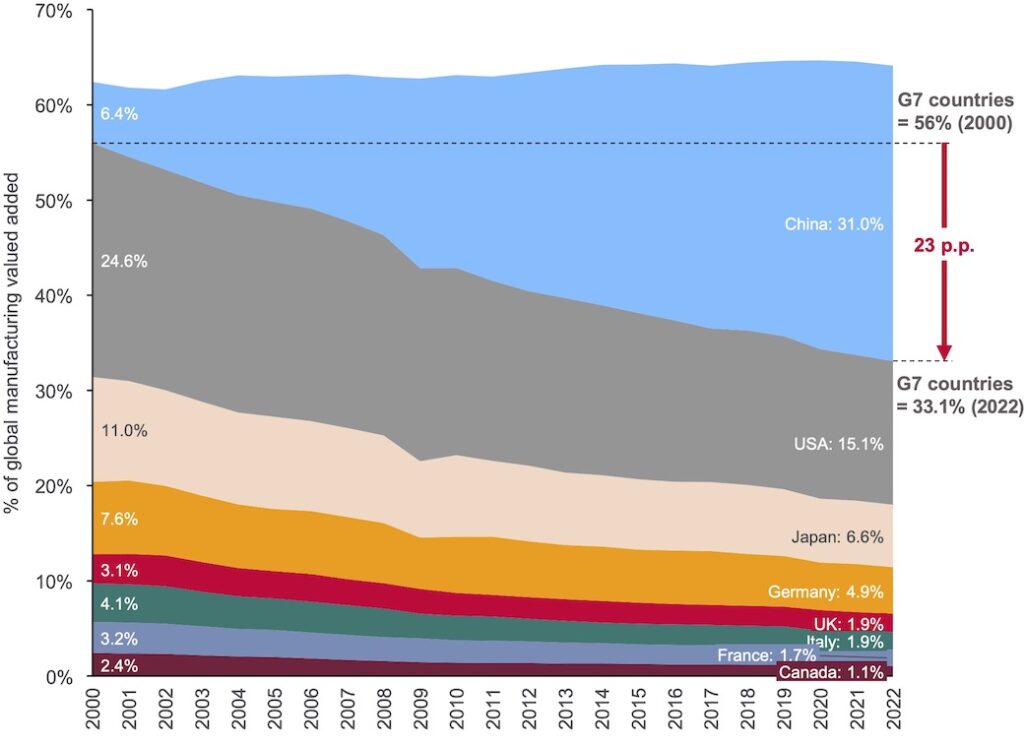
Loss of competitive advantage by the G7 countries has resulted in a shift in the global economy, with China and India showing extraordinary high rates of economic growth through innovation.
“The question for the UK is not whether we innovate, but whether the innovation translates into competitive industries at home,” he said.
“Growth strategies succeed when innovation connects to sectors that can scale, export and compete globally.”
UK investment in R&D not matched by economic growth
In 2000, the G7 countries created 40% of global GDP, with China and India accounting for 14%. In the last two decades this has radically changed. In 2022 the G7 contribution had fallen to 27% and China and India had grown the 27%.
During this period UK investment in science research and technology development has been sustained
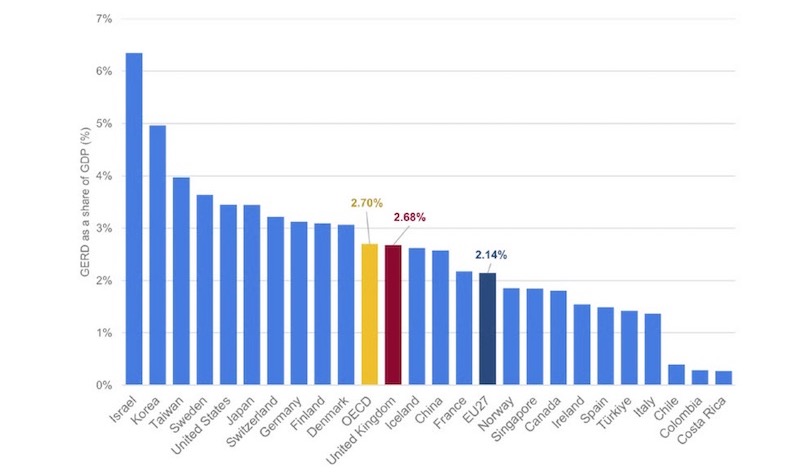
- UK spends 2.68% of GDP on R&D (3.5% of global spend)
- Ranks fourth worldwide for scientific publications
- Investment in basic research is above the OECD average
However, R&D spend is not translating into competitive advantage, high-tech exports have fallen, from 8.7% to 6.4% of total UK exports.
Carlos López-Gómez, co-author of the report comments:
“The UK cannot simply become the ‘lab of the world’ with new products and services based on knowledge created here but produced abroad.”
Co-author Dr David Leal-Ayala agrees saying that:
“Industrial strategy must focus less on the number or valuation of high-growth firms and more on whether innovation helps to regain competitiveness in priority sectors.”

“Effective industrial policy should focus on strengthening the innovation and competitiveness of high value-added tradeable sectors,” Lord Sainsbury continues, he recommends putting innovation at the centre of economic activity and recognising structural change as a fundamental driver of long-term growth.
UK manufacturing excellence can exploit high-value niches
In an international context, increasingly shaped by scale, capital intensity and geopolitical fragmentation, the UK’s competitive advantage lies in specialization, quality, and product differentiation.
In the report the electronics sector was used as an example of structural change. What we see in this sector is a long-term shift away from price-sensitive, high-volume manufacturing towards high-value, knowledge-intensive and regulated niches.
The sector has increased in value, so although the UK share has declined, the size of the pie has grown and UK activity has become increasing concentrated in high-value niches where it has specialist knowledge.
At the same time productivity has increased which has reduced employment, but growing these sectors would create further employment opportunities.
The authors say the big challenge is to reverse the decline of high-value-added sectors and create an environment where research strength is translated into domestic production, export performance and sustained industrial performance.
A number of constraints to competitiveness identified
Skills shortage – demand for engineering professions are expected to grow between 2025 and 2030
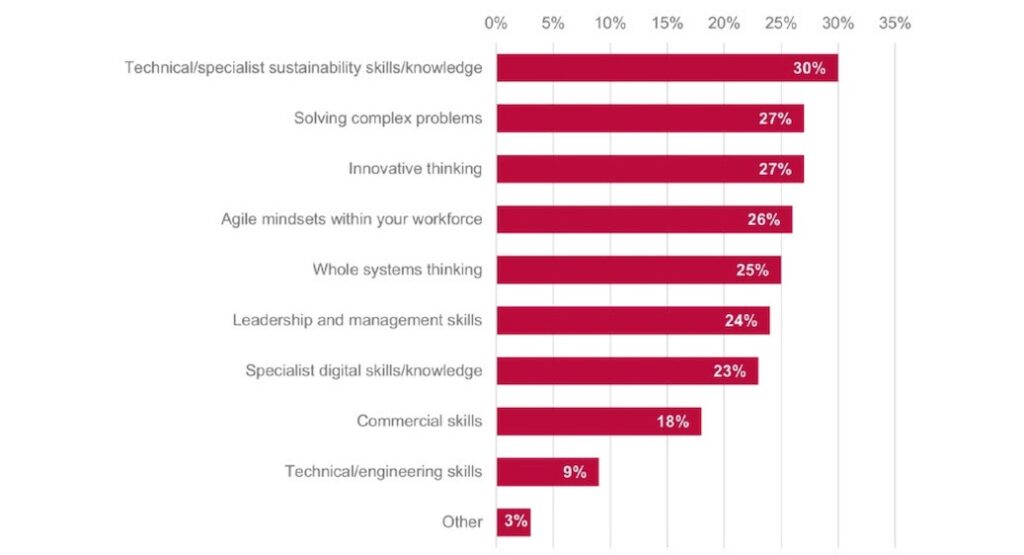
However, 76% of employers in 2025 reported difficulties in recruiting personnel with the required skills which included innovative thinking, solving complex problems, and sustainability skills.
Lord Sainsbury suggested that one of the challenges is a mismatch between the courses being offered and the skills required by industry.
Technology scale-up limited – dominated by a few sectors and going overseas
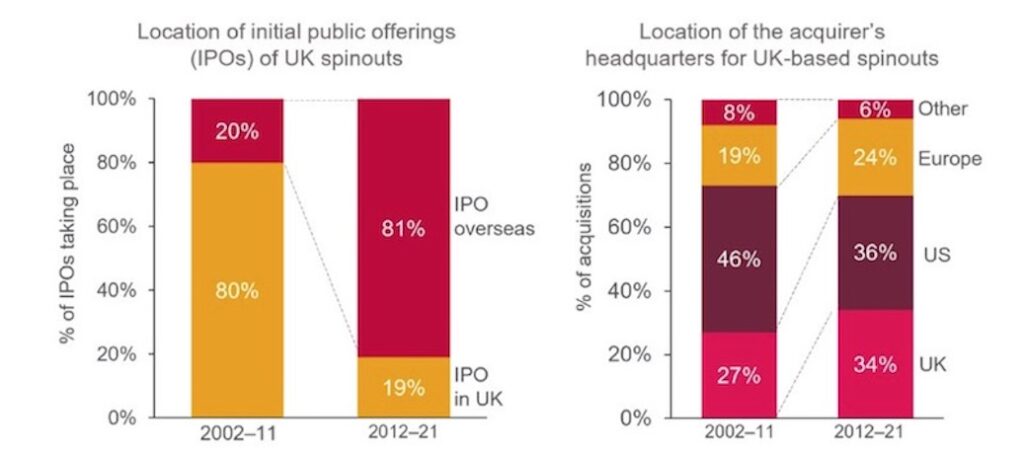
Technology scale-up was dominated by three sectors – life science, software and fintech – and technologies developed in the UK are being acquired by foreign firms at an increasing rate, raising concerns about local job retention, IP ownership and strategic decision making.
Since 2012, 80% of university spin-outs initial public offerings (IPO) have occurred overseas, a reversal from the early 2000’s, and only a third of trade sales are by companies with headquarters in the UK. US (36%) and Europe (24%).
Dependence on use of tax credits – is it creating unintended consequences?
The report asks if the UK has the right mix of policy instruments as potentially the way that government funds innovation is reducing opportunity for scale-up.
In particular, there has been a major shift away from grants, which are used by early-stage companies to create proof of concept, towards R&D Tax credits.
Some commentators at the launch suggested that this has created a dependence on Venture Capital. VC’s look for an early exit, creating pressure for a trade sale. Greater access to patient capital would allow a longer runway for deep technology development and commercialisation in the UK.
Are the priorities correct?
UK’s businesses placed more emphasis on basic research than other OECD countries, and less on experimental research, where new and existing research is used to create new products or improve existing processes.
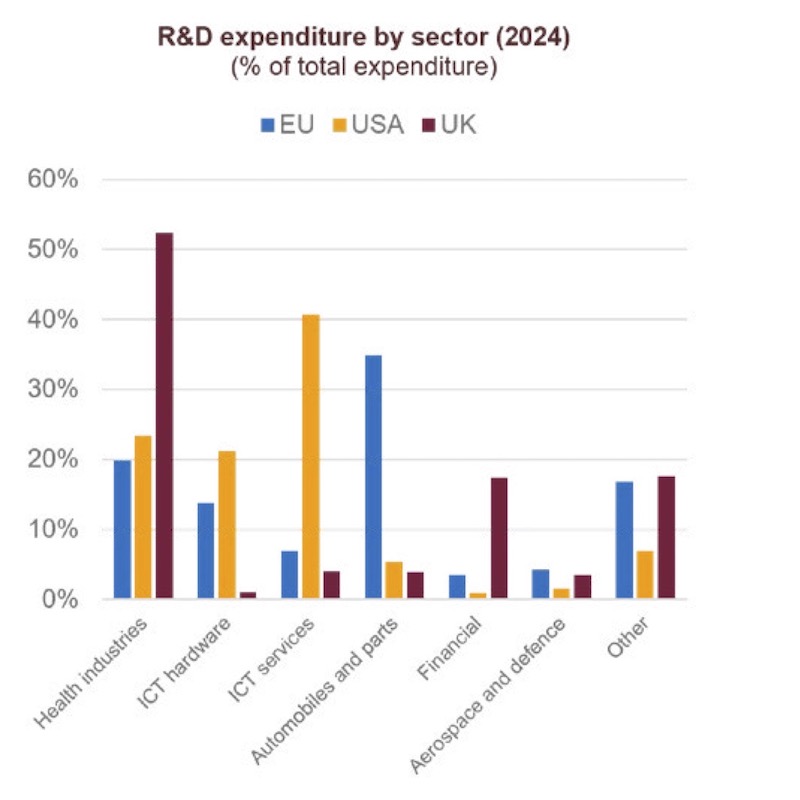
Additionally, some sectors were responsible for a disproportionate share of the funding. In 2024, 2,000 firms were responsible for 90% of all business-funded R&D worldwide. Of these 54 were UK owned, with the pharmaceutical sector investing 52.4% of the funding.
Funding by the Government to support business enterprise related expenditure on R&D was also focussed on a narrow range of sectors, with some sectors that offer potential for strong economic importance such as food products, beverages, and motor vehicles, receiving less public investment than their international peers.
Panel discussion
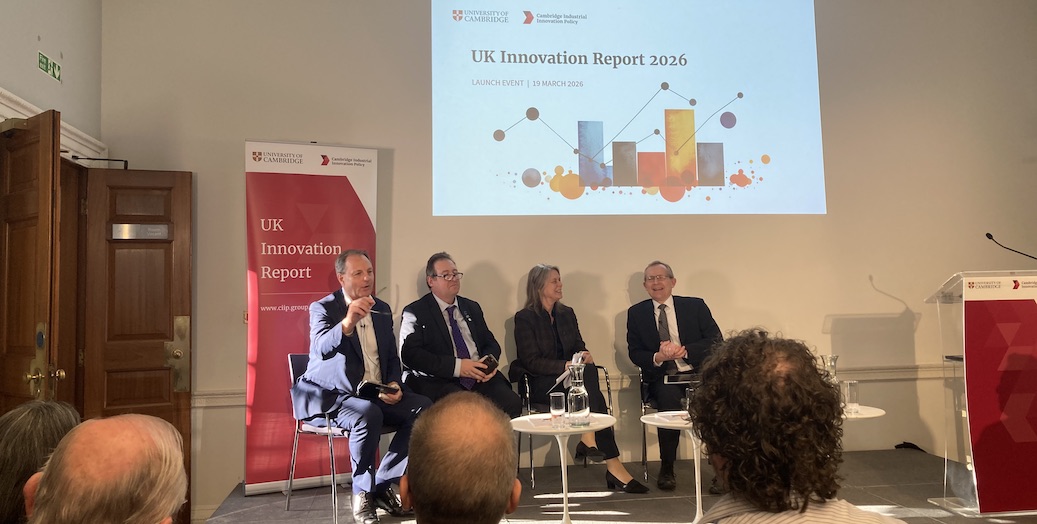
The launch included a panel discussion chaired by Prof Tim Minshall, IfM.
The participants: Dave Smith, UK’s National Technology Adviser (NTA), Sharon Todd, CEO of SCI (Society of Chemical Industry) and Stewart Lane, President the Manufacturing Technologies Association and Head of Business Development of Renishaw, a global engineering and manufacturing business.
What are the implications for technology scale-up and industrial competitiveness?
There was a consensus within the panel over the need for structural change, with Dave Smith saying that chaos offers an opportunity.
In the past, the UK has lost production opportunity as the labour costs were lower overseas. With increased automation this is less true but raises the question do we have the skills? Dave asked whether different types of institution were needed to develop the skills required. Potentially, universities are being asked to do too much – educate, basic research, spinout – with one set of incentives.
Sharon Todd commented it shouldn’t be overlooked that skills are often available in large companies, particularly in scale-up of processes. She sees a role for mentoring between companies to develop these skills in early-stage companies.
She also questioned if the UK was using too few incentives to encourage manufacturing. Other countries support the whole journey, seeing manufacturing as a vital element in getting to market.
Stewart Lane agreed. His company works in a niche area, so invests internally to ensure its quality and responsiveness, but he saw a role for government to support investment in the latest production technology. He said that Italy and Germany are gearing up with new technology that is also greener – improving sustainability.
Sharon took this point, saying that the elephant in the room is the need for a secure, competitive energy strategy. For example, the next generation of chemical plants offer a new way to manufacture that is also energy efficient; but that set up costs require deep pockets.
Other sources of funding were discussed. The UK has one of the best markets for VC funding but there is a scale-up gap, and companies need to go overseas investors and locations to become international players. Potentially UK pension funds could play a role – in the US pension funds invest in equities and offer better returns than their UK peers.
Dave saw potential for using government procurement to drive innovation, creating an industry partner to help de-risk technology before wider adoption. (The UK government has subsequentially announced it has commissioned a quantum computer.)



Key message: Competitive advantage depends on innovation, but this should be directed at where it provides greatest competitive advantage, with success determined by the extent to which it builds domestic production capability, exports, and sectoral depth over time.
Related stories
2026 March 4
Government to create new lab to keep UK in the fast lane on AI breakthroughs
A new UK AI research lab will be created to unlock breakthroughs which could transform healthcare, transport, science and everyday technology.