The crucial role of the board was highlighted in a conference hosted by Innovationsledarna and RISE. It concluded that both the mix of competences and the way the board operates, need to align with challenges facing the growth direction of the organisation.
“Summing up the outcomes I would say we delivered a well-rounded and evidence-based conference with real cases on how leadership and boards need to evolve for organisations to be able to stay relevant in the ever-increasing pace of change and uncertainty we all try to navigate,” comments Vilho Jonsson, Head of Operations at Innovationsledarna. He is also Founder & Principal Innovation Evangelist at Curlabs.
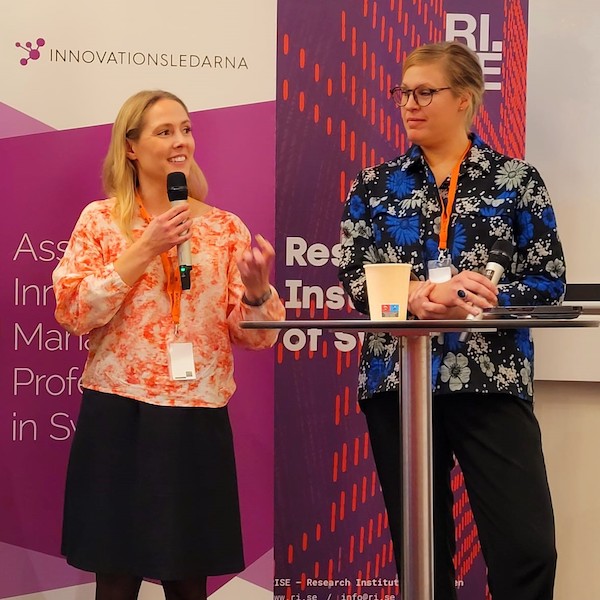
The conference “Successful investments in an uncertain world” enjoyed presentations and panel discussions with innovators and investors across the public and private sectors. It was a hybrid event hosted by Innovationsledarna and RISE with R&D Today as the media partner.

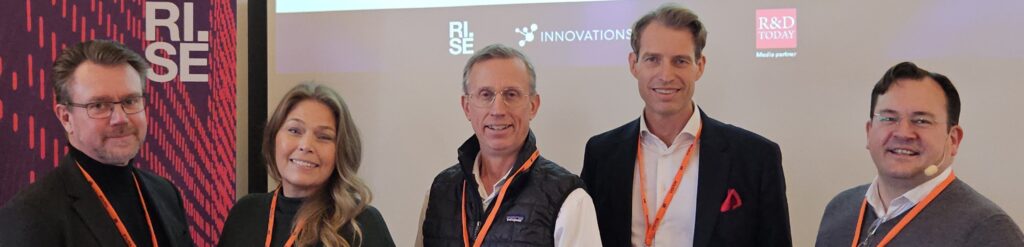
The conference started with great opening remarks by Malin Frenning CEO of RISE, Research Institutes of Sweden and Noboru Konno Chairman of JIN, Japan Innovation Network on the current gaps in innovation work and importance of innovation management to be able to navigate uncertainty and the pace of change.
The keynote by Professor Mats Magnusson, KTH and board chairs and researchers Henrik Forzelius and Liselotte Engstam gave us insights from research on how boards can successfully become proactive and enable strategic leadership and business renewal rather than stagnation.
The later panels highlighted the importance of boards and investors understanding the context and ecosystems that companies and organisations are in and where the trends are taking those contexts.
Vilho concludes that discussion showed: “It’s crucial that boards are made up of individuals that together provide a mix of competence that matches the challenges facing the growth direction of the organisation, as well as the way that the board actually carries out its work is adapted to the need for dynamic capabilities and strategic leadership in the specific sector.”
Proactive boards are needed to ensure successful future focussed investment – five takeaways
Jenny Nilsson, panelist and chair of the board for Zmartrest shared her key take aways from the conference.
She says: “I left with a deeper understanding of how innovation, governance, and investment thinking must evolve together.”
- A shift in the board’s role: boards must move from being primarily supervisory and controlling to becoming active and engaged (co-creative) partners who provide strategic leadership together with the executive team.
- The risk paradox and business transformation: The greatest risk is not taking risks. It is crucial that the board has the competence and skills required to drive the transformation from innovation to profitable business.
- Handling disruption: Boards struggle more with gradual disruptions (such as e-commerce or AI) that evolve over time than with sudden crises. Proactive boards must continuously explore strategic directions and encourage experimentation.
- Dynamic capabilities: Proactive boards use “dynamic capabilities” — sensing the external environment (independently of management), pivoting (making radical decisions under uncertainty), and aligning resources for new initiatives.
- Innovation as an imperative: Innovation Management Systems (IMS, e.g., the ISO 56000 series) are essential to ensure that innovation is treated as an organization-wide imperative, not just a matter for an isolated department.
Swedish Innovation Leader of the Year 2025
Swedish Innovation Leader of the Year is an award established by RISE, the professional association Innovationsledarna, and Vinnova. The prize aims to inspire and highlight leaders who succeed in turning innovation into tangible benefits – both within their organizations and for society at large.
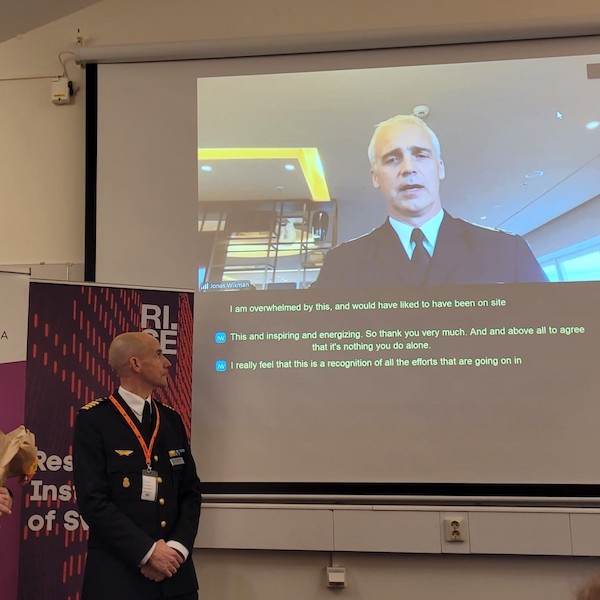
Major General Jonas Wikman, Air Force Commander, Swedish Armed Forces, was awarded the public sector Innovation Leader of the Year 2025, and his colleague attended to collect his award.
In his role as Air Force Commander of Flygvapnet (Swedish Air Force), Chief Major General Wikman has developed an innovation culture that embraces academia, industry and the military profession.
The judges commented that he has laid the foundation for a culture and structure where innovation can be systematically taken from discovered needs to concrete benefits for the soldier and officer.
An example of this collaborative spirit and agile approach is the “Loke” project, which will serve as a blueprint for future projects. Loke is a collaboration between the Swedish Air Force, the Swedish Defence Materiel Administration (FMV), and Saab. In response to the growing threat from drones, in just 84 days the team created an innovative new capability to detect and counter hostile drones, marking a significant advancement in counter-drone technology.
Air Force Chief Major General Jonas Wikman comments: “This is a clear example of how we are building the capabilities required and that we are prepared to deviate from normal processes to meet today’s threats quickly. We need to constantly evolve and find fast and competent solutions to build a stronger Air Force.”
The system is scalable, adaptable to evolving threats, and can be further enhanced with additional sensors and weapon stations.
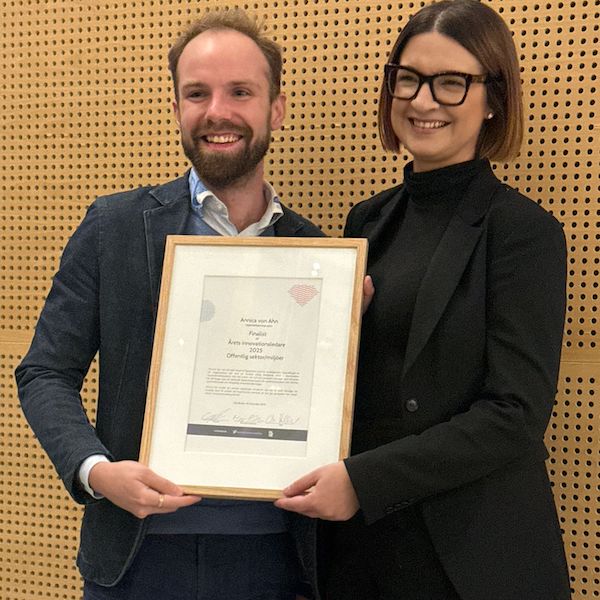
Finalists for the public sector
Linda Teng, Concept Manager for student and research housing at Akademiska Hus, and a board member of KTH Live-In Lab has been awarded Swedish Innovation Leader of the Year 2025 for the private sector.
Through strategic collaboration and co-creation, Linda has established test environments, networks and new ways of working that have led to tangible results, from reduced CO₂ emissions to increased social inclusion through the recognition of completely new forms of housing.
Her work has influenced legislation and regulations that have supported the global sustainability goals and created solutions that are both scalable and sustainable.
The Climate Action House building on KTH Campus in Stockholm is a test bed where research, business models and concepts for shared premises will be tested and refined. The aim is to create more flexible and resource-efficient use of the built campus environment.
Linda explains: “The testbed gives us a valuable opportunity to understand how to create more vibrant campus environments where living, study and collaboration environments can be integrated. Here we can test and develop flexible solutions that meet different needs and thus increase both the comfort, benefit and use of our buildings.”
One project aims to increase the amount of accessible accomodation for students within a smaller footprint.
Linda’s work demonstrates how strategic innovation leadership can generate real and long-term value for both organizations and society as a whole