Crowdsourcing innovation is a valuable tool for ideation, says Steve Rader, former programme manager at NASA’s Center of Excellence for Collaborative Innovation (CoECI).
He explains how this technique has been harnessed to capture in days, innovation that would otherwise take years.
The NASA Tournament Lab (NTL) connects with a global network of problem-solvers, such as Freelancer.com, to develop innovative solutions to real-world challenges faced by NASA and the Federal Government.
Steve was a keynote speaker at the R&D Management Conference 2021.

The big risk – being surprised by disruptive technologies
People don’t realise that 90% of all scientists that have ever lived on the planet are alive today
In real terms this means we are going through a technology explosion. This can be described in lots of different ways, but particularly it means low-cost, powerful technology building blocks, such as cheap sensors, cheap robotics, software APIs, blockchain, even things like CRISPR, where you can do cheap gene editing. These things are now accessible to almost every industry and the future is cross-industry innovation.
At no other time in history have we seen so many great technologies being developed that are solutions to our problems.
The issue is that you cannot find them and that carries a risk of being surprised by disruptive technology as you never saw them coming.
The business imperative for innovation
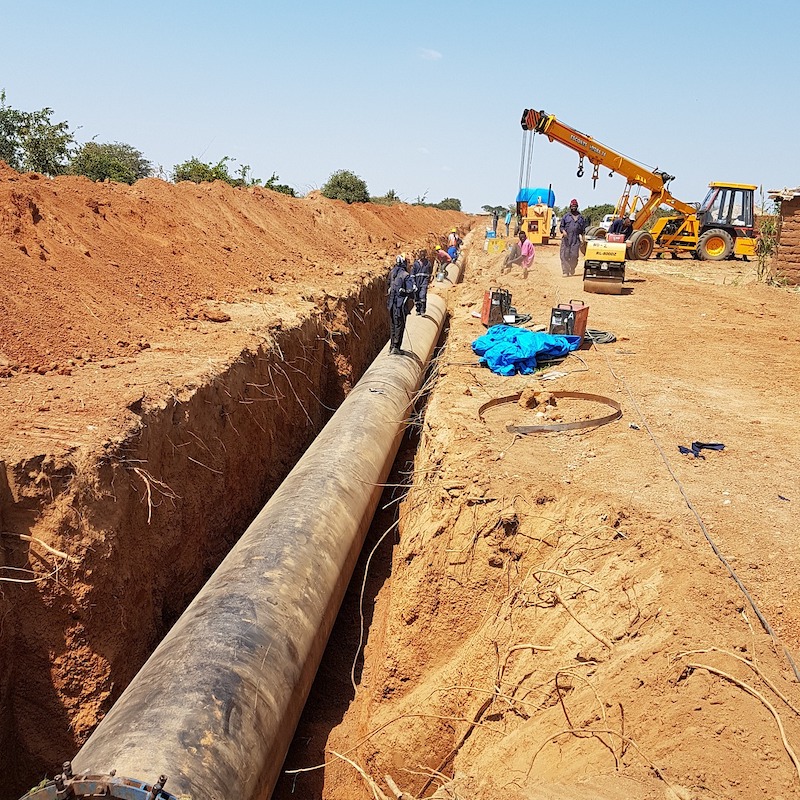
Until recently this was very expensive, to inspect undersea pipelines, you would need to hire a ship at $1 million a day, lower a van sized piece of equipment next to a pipeline, and for two weeks it would scan that pipeline to inspect it.
An established pipeline company looked for alternatives, within two weeks it found a technology that was already in use in the mining industry that was handheld and could do that same job in two hours. But what they said was ‘this is going to save us a ton of money’ – which it was – but tellingly ….
‘if we hadn’t found this technology and our competitor had, we would no longer be in this business’.
This is happening over and over, and if it’s not happening to your organisation, that’s giving you a false sense of security, because you don’t know what those technologies are.
Crowdsourcing innovation to find those disruptive technologies
If I put an individual in my organisation to innovate, because of their domain knowledge, the nomenclature they use, the way they talk about the subject area, they’re only going to find two or three solutions.
A team will out-perform an individual.
But, if I really want to innovate, I use the crowd. Crowdsourcing innovation acts as a dragnet across all these different disciplines, to find the technologies.
Open Innovation for crowdsourcing innovation
Dr Alph Bingham is a pioneer in Open Innovation. In the early 2000s, he went to Eli Lilley, and wanted to try out the idea that diversity is the key to advancing real R&D work.
He found the top 22 different problems that they were researching and got permission from the chief scientist to put them up on a website and asked the public to try to solve those.
The very first day every single scientist working at Eli Lilley on those problems went to the chief scientist and said ‘you need to take these down, these should never go public, they’re going to ruin the company, you hired us to do those problems’.

You see the problem with open innovation and the old model, is they come together in friction. He basically addressed their issues of intellectual property, they abstracted some of those, and then reposted them.
They ended up solving the majority of those problems and that was start of InnoCentive, which now has almost half a million solvers that are solving really hard problems.
Open Innovation offers a power tool to keep pace with technology
We’re all familiar with Uber and AirBnB – these are matching platforms, they match something: somebody with a need with someone who has a resource. These platforms do this with high trust, low friction, at scale. That’s what we’re seeing in the innovation space, and now in the talent space as well.
You can kind of think of these as curated communities, communities of passion. There are about 700 of these platforms, and they are kind of two-sided networks that on the one hand are pulling in people and connecting to other people who have that same passion, and they’re mobilizing it to the other side of the network, which is company and other organization needs, in creating this win-win of value proposition.
Benefits of prize challenges for focusing crowdsourcing innovation
The solution is not about expertise; it doesn’t always require someone who is a world expert, just someone who can connect the dots. This is what we see in the research out of MIT:
- 70% of the time the successful challengers came from somewhere not in the domain of the challenge owner.
- 75% the solution already existed.
It literally was the connecting of the dots the majority of the time.
However, crowdsourcing innovation has a very high signal to noise ratio problem, and anyone who’s run an open innovation challenge knows that this is the problem.
This is where prize challenges are really effective. They are the matching algorithm that works best for finding the unexpected.
These platforms are very effective at formulating the right problem statement, designing the challenge, executing the challenge, filtering that solution down.
So, you don’t have to look through 5,000 submissions, and helping you pick the winners and helping you get that intellectual property that you need.
Examples of successful Open Innovation Challenges

Challenge: ‘We need to remove grease from chips’
One potato chip company came with a challenge to improve the way that grease was removed from chips/crisps. The way they were doing it was to mechanically vibrate the chips so they could shake the grease of those crisps. I would say that food production engineers are largely mechanical engineers; I’m a mechanical engineer, our expertise is vibration, thus a vibration solution – brilliant, right?
The first thing InnoCentive did was to reframe the problem statement from ‘how do you remove grease from potato chips?’ to ‘how do you remove a viscous fluid from a delicate wafer?’
This reconstitution of the problem statement was huge, because it opened up the problem to almost anyone with a science background, or anyone that understood that problem statement.
For protective reasons, it also hid the fact that the challenge came from a potato chip company.
It turns out the solution to this was to vibrate acoustically the air around the chips at a frequency that would resonate with the fluid and basically cause it to fly off the chips.
That was developed and submitted by a violinist, who was an expert in vibration but not a mechanical engineer.
The vibration experts were mainly ignorant to this solution; even experts have blind spots, and the crowd can help you break out of that and widen your field of view so that you can bring in the real innovations that you don’t already have access to.
Challenge: Achieving in days what had taken in years
Roche Diagnostics brought in 12 of their problems. One of them was their diagnostics machine that they had worked on for 15 years, and they needed a very precise measurement for the intake quantity and quality.
They ran a 60-day challenge for a very modest prize, and at the end of that not only did they solve the problem, it came independently from two solvers, which meant that it existed already.
What blew them away was that when they looked at all of the submissions, everything they had tried in 15 years of proprietary research had been replicated in 60 days, by a crowd that was not supposed to be experts in this field.
Crowdsourcing innovation – learning points for practitioners
We’ve been doing this for ten years and have done over 500 challenges now across a realm of different types, anywhere from multimedia to real engineering models. You can see they are largely successful, largely cheaper than traditional methods, and we get really great results.
- Overcoming cultural resistance. We tell our people ‘look, you are still the innovators, we’re not trying to steal the best part of your life – innovation has no value until it’s actually working for you, and that’s your job.’ Ask your R&D team to identify what the speedbumps are between where they are and where they want to go.
- Great way to pursue risky lines of inquiry. We’ve had researchers participate on the challenge who said ‘we were able to try things that our lab supervisor would never have let us pursue’. A lab supervisor has a budget and they don’t want to waste it and being risk-averse keeps us away from innovation.
- There is a new emerging workforce. Platform based communities are starting to become not just useful, but a trend the entire workforce is shifting towards – largely to gig and freelance work. Looking at projections on a study from 2017, by 2027 there will be more freelancers than full-time workers. This will change how you access skills.
We want to supercharge our folks, and that’s really what we’ve tried to do here.
Future is open
If you’re not doing open you need to figure it out. Innovation was something that some firms did every few years to keep productive.
I would say, R&D it should never have been optional, but we need to figure out how to use these tools. It is not easy, but if you hope to survive this rate of change I think it has to be one of your core tools.
Beyond NASA
You don’t have to be NASA to benefit from crowdsourcing innovation – in a guest post Trisha Epp, Director of Innovation for Freelancer International, one of NASA’s partners explains how challenges can be created for all types of companies.