
Analytical or Intuitive – finding a sweet spot for strategic thinking
There are at least two modes styles of thinking that managers appear to follow in developing their strategy: intuitive and analytical.

There are at least two modes styles of thinking that managers appear to follow in developing their strategy: intuitive and analytical.
![The Permeable Funnel model of Open Innovation[click to enlarge]](https://www.rndtoday.co.uk/wp-content/uploads/2017/05/Permeable-Funnel-300x196.jpg)
Open Innovation (OI) is an approach whereby organisations, originally companies but increasingly governments and NGOs, seek to collaborate with others to deliver innovation.


There are many challenges when managing international R&D, some of these are similar to those of international management in general but some elements come into sharper focus due to the concentrated nature of the knowledge assets.

How do you choose which technologies the firm should invest in? How should new technologies be acquired, developed, protected and integrated? How can you decide the most appropriate means of exploiting technology resources and assets?
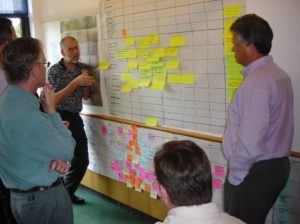
Roadmapping is a powerful technique for planning an organisation’s technological capabilities to ensure they meet its commercial or strategic goals. The concept provides a metaphorical image of a roadmap being used to navigate a business through partly known/unknown territories.

Creativity can seem quite a messy discipline, but I find it useful to categorise it into 4 aspects: process, people, product and place, based on work by the pioneering US creativity researcher, Mel Rhodes.

Our scientists are all doing great work in diverse areas, how could I define this work to ensure it was creating value for the company? Stokes model of the Pasteur’s Quadrant provided the inspiration I needed, says Dr Joe de Sousa, Director Science & Technology, AstraZeneca
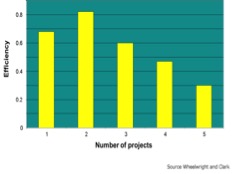
A friend in R&D was moaning about how his CEO was forever loading new projects into R&D. “It just fouls things up”, he said, “The more we try and take on, the less actually gets done”. It got me thinking is there a Reynold’s number for R&D that predicts when more is genuinely less.

Although there are many tools and methodologies available to support R&D and much best practice, this is not readily available to those in industry. Assessing the appropriateness of R&D management training would make a good industry project for a masters student.

Cognitive bias, where a decision-maker actively seeks out and assigns more weight to evidence that confirms their hypothesis, can disrupt the technology strategy which needs to be objective.

Professor Ellen Enkel explored trust in two dimensions: trust in technology and trust in the innovating firm to understand the relationship between humans and automation. She identifies the factors essential for reducing perceived risk.