Steve began his career as an industrial research scientist in R&D and then completed a 3-year management training programme in, operations, strategy, finance, and marketing for the Imperial Group.
After that, his roles included: Chief Chemist followed by Business Director for Thorn EMI’s Security and Sensors Division, Partner in PA Consulting Group’s Technology Strategy Practice, and the European Technology and Innovation Management Practice Leader at Arthur D. Little.
Twenty years ago, he founded nu Angle with Dr Peter Allen, a physicist who had also worked in R&D before being an adviser. nu Angle is an international consultancy specialising in Technology and R&D Management.
Steve retired from his full-time Director role at nu Angle in March 2019 to pursue other interests, but he still provides advice to clients in the healthcare and FMCG sectors as an adviser with SPB Associates.
He has more than 30 years’ hands on experience as a business advisor to large corporations, working in R&D on-site across Europe, the Far East, and the USA. His major assignments have included R&D reorganisation, Technology Strategy and Planning, as well as product innovation and technology commercialisation.

Related posts
In 2025 there was a significant increase in global organisations looking to restructure R&D operations. Research by Steve Bone has revealed that measures directed at improving operational efficiency may infact pose a ‘significant risk of slowing innovation’ unless it has a clear strategic direction.
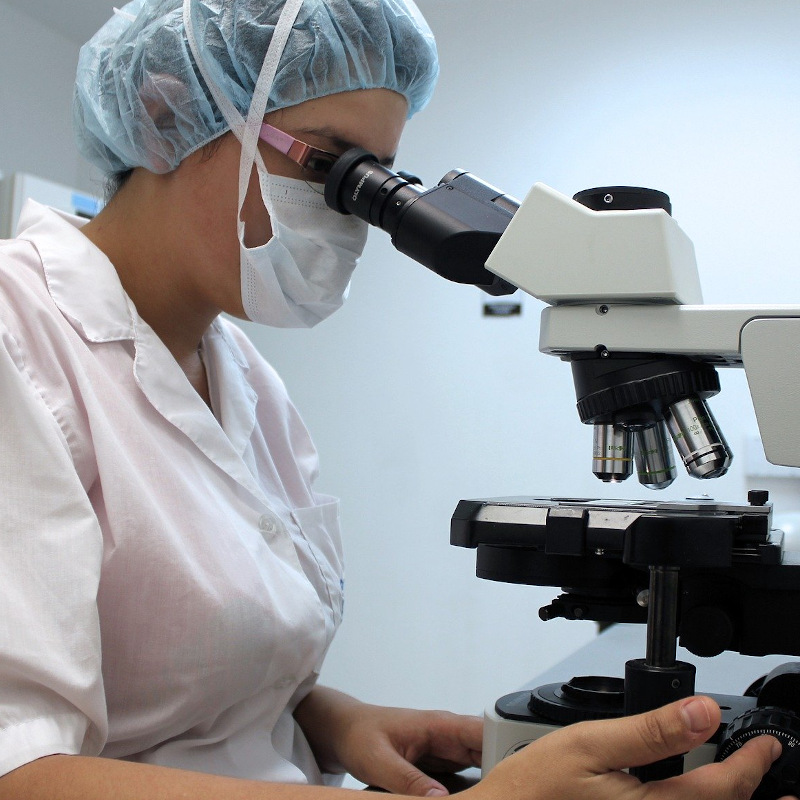
Gradual lifting of lockdown by the UK government means that laboratories in both academic and industrial settings will be opening, Steve Bone explains this is far from trivial and offers some advice on best practice.

Quickly assessing a mass of diverse and sometimes misleading information, such as that presented by the COVID-19 crisis is exactly what many R&D managers have to do, writes Steve Bone. Fortunately, there are tools that can help those that need to be instant experts.

Computing technologies from 5G to artificial intelligence and their implications for the economy and society were major features of the recent Davos Conference, according to analysts at Mckinsey writing in an article ‘Reflections on technology from Davos 2020’. Dr Steve Bone reviews the article suggests that computing is just the most visible part of disruptive technology.

Want to know about R&D Management but too busy to read all the journals? The editors for R&D Today have each selected a journal and have made a selection of the most interesting papers of recent years.
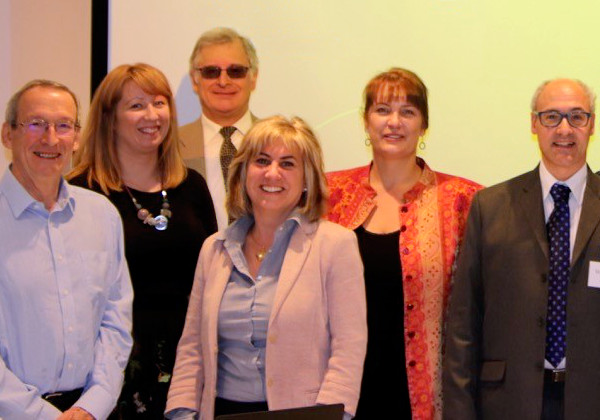
The RADMA trustees meeting was hosted by Wiley Business in Oxford

R&D Today officially launched at R&D Management Conference 2016; community website aims to be ‘trip advisor’ of best practice.

Convergence of technologies creates the opportunity for disruptive business models, Steve Bone reviews an article in Prism which identifies a number of potential scenarios for the chemical industry.

Based on their observations of top-performing businesses, Cooper and Edgett’s paper provides a structured framework for strategy development

Chatbots have evolved to answer questions and may now offer new ways to communicate knowledge within a lab, according to a recent paper by Accenture. Steve Bone considers this new development.

Could tools used by the digital industry provide answers for more traditional sectors? Steve Bone discusses a McKinsey article about tools and techniques

The removal of unpleasant smells from the human body and living spaces has been a challenge across the years. Despite considerable investment by large companies there is not yet a complete solution. A new report outlines a new approach that is making advances.

A strong technology platform provides a competitive advantage for a organisation. If the technology is transferable to other markets it offers the potential for growth.