RADMA travel grants help scholars make the squad #RND2026
We are on our way to Manchester.

Menu

We are on our way to Manchester.

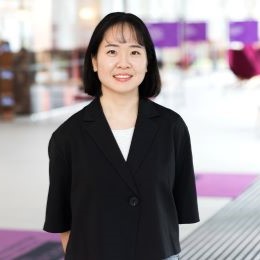
RADMA scholar Seung-Hyun Lee gained support for her research, which culminated in a thesis “Exploring the Positioning of Research Actors through Interdisciplinarity and Research Collaboration: Insights from the Case of Korean Public Research Institutes”.

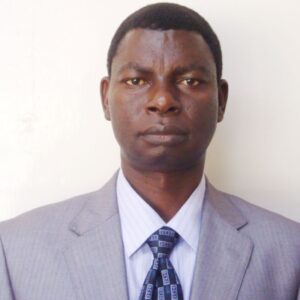
John Makokha gained RADMA support for his research, which culminated in a thesis: “Integrated Corporate Social Innovation: unmasking a values-based corporate sustainability framework for the management of corporate sustainability tensions in financial institutions in sub-Saharan Africa”.

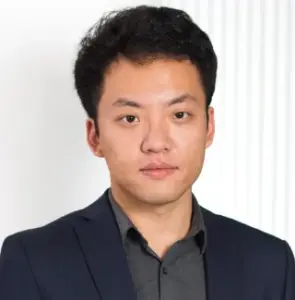
RADMA scholar Dr. Yanze Liang gained support for his research: “Chinese Multinationals, Strategic Asset-Seeking M&As and Post-Acquisition Innovation Performance”.

AI technologies are evolving at the fastest speed and organisations are rapidly adopting these technologies. However, relatively little is known about the precise role of AI as an agent of innovation. RADMA scholar Soo Young Choi investigated this fascinating subject that will far reaching implications for innovation management.

Sven Schimpf says this year’s programme reflects contemporary trends in R&D and innovation and the call for tracks received more responses than expected.
“The format of the conference, which incorporates a colloquium for PhD students, has continuously evolved during the last years and has gained a remarkable state of maturity,” he says.
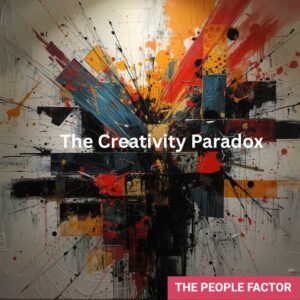
Creativity needs openness, curiosity and time to explore. Execution needs focus, evidence and control. If we only protect creativity, we get dispersion. And if we only protect control, we kill learning too early.
This tension, Abdelmoula El Hadi, Group Head of Innovation at Knauf Insulation, describes as the Creativity Paradox and he shares his actionable insights.
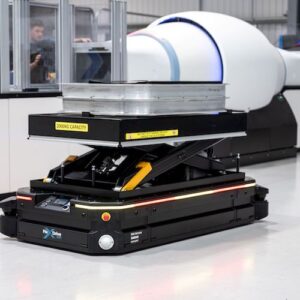
Deep decarbonization of the automotive sector requires more than isolated efficiency measures, it needs a whole systems approach and reconfiguration of the core business models therefore education and capacity building interventions are imperative. The “Sustainable Futures Programme” created a blended learning model using input from Siemens plc, members of the Northern Automotive Alliance (NAA), and facilitation by the University of Salford’s Centre for Sustainable Innovation.

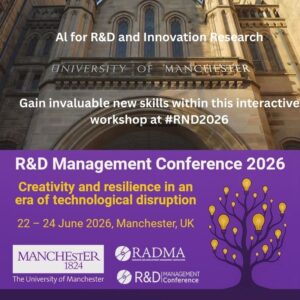
AI-based methods are widely used for R&D Management studies – with over 50 publications in 2024-25. Here is an opportunity to gain invaluable new skills in this rapid evolving area. Join an interactive workshop at the R&D Management Conference.
We are living in a flux world, observed Andy Neely at Rethinking Innovation 2026, describing the perception that instability, transformation, and uncertainty are now a constant rather than extreme events.
Tim Brown of IDEO defines design thinking a discipline that uses the designer’s sensibility and methods to match people’s needs with what is technologically feasible and what a viable business strategy can convert into customer value and market opportunity.

By becoming regulators of their ecosystems, and effectively running the business relationships, data exchanges, and transactions, platform firms are acting as private governors with the power to create their own domains or ‘turfs’.
Annabelle Gawer explores how the process of digitalisation has led to the economy-wide redesign of value creation, delivery, and capture processes.