Skip to content
Generic filters
Exact matches only
Search in title
Search in content
Search in excerpt
Filter by Article Type
Papers
Events
Tools
Funding Articles
Case Studies
Resources
Opportunities
Theme Editor Blogs
Filter by Categories
Business model innovation
Ideation and creativity in R&D
Latest news
Managing international R&D
Managing technology platforms
Managing the R&D pipeline
Open innovation
Outsourcing R&D
Project valuation and selection
R&D strategy
Roadmapping
Stage gate processes
Technology intelligence
  • Home
  • About
    • About R&D Today
    • Contributors
    • R&D Publications
    • R&D Today newsletter archive
  • Themes
    • Key R&D Themes
      • Rationale for key themes
      • Ideation and creativity in R&D
      • Managing international R&D
      • Managing the R&D pipeline
      • Open Innovation
      • Roadmapping
      • Technology Strategy
    • Deep Dive
      • Dynamic capabilities for strategic innovation
      • Would a ‘Strategy Lab’ provide sustainable renewal of competitive advantage?
      • Design Thinking
      • China’s new model for Open Innovation
      • Penetrating the fog of Agile
      • The resurgence of frugal innovation
      • Impact of digital technologies
    • Special Focus
      • The People Factor
      • Innovation for a Sustainable Future
      • How to measure the value created by innovation
    • Key Conference Tracks
      • Business model innovation
      • Entrepreneurial Ecosystems, Innovation Ecosystems and platforms
      • Intellectual Property Rights
      • Sustainable Innovation
    • Innovation Leadership
      • Innovation Manager job description
      • Best books for innovation management?
      • Must read papers on aspects of R&D Management
  • RADMA
    • About RADMA
    • R&D Project Exchange
    • Celebrating 40 Years of RADMA
    • RADMA Scholars
    • R&D Management Journal
  • The Pentathlon Framework
    • Strategy
    • Ideas
    • Selection & Prioritisation
    • Implementation
    • People & Organisations
  • Knowledge Hub
  • R&D Management Conference
  • Events
    • Upcoming events
    • Events Archive
  • Contact
  • Home
  • About
    • About R&D Today
    • Contributors
    • R&D Publications
    • R&D Today newsletter archive
  • Themes
    • Key R&D Themes
      • Rationale for key themes
      • Ideation and creativity in R&D
      • Managing international R&D
      • Managing the R&D pipeline
      • Open Innovation
      • Roadmapping
      • Technology Strategy
    • Deep Dive
      • Dynamic capabilities for strategic innovation
      • Would a ‘Strategy Lab’ provide sustainable renewal of competitive advantage?
      • Design Thinking
      • China’s new model for Open Innovation
      • Penetrating the fog of Agile
      • The resurgence of frugal innovation
      • Impact of digital technologies
    • Special Focus
      • The People Factor
      • Innovation for a Sustainable Future
      • How to measure the value created by innovation
    • Key Conference Tracks
      • Business model innovation
      • Entrepreneurial Ecosystems, Innovation Ecosystems and platforms
      • Intellectual Property Rights
      • Sustainable Innovation
    • Innovation Leadership
      • Innovation Manager job description
      • Best books for innovation management?
      • Must read papers on aspects of R&D Management
  • RADMA
    • About RADMA
    • R&D Project Exchange
    • Celebrating 40 Years of RADMA
    • RADMA Scholars
    • R&D Management Journal
  • The Pentathlon Framework
    • Strategy
    • Ideas
    • Selection & Prioritisation
    • Implementation
    • People & Organisations
  • Knowledge Hub
  • R&D Management Conference
  • Events
    • Upcoming events
    • Events Archive
  • Contact

Menu

Design thinking is the place to start for smart solutions

Tim Brown of IDEO defines design thinking a discipline that uses the designer’s sensibility and methods to match people’s needs with what is technologically feasible and what a viable business strategy can convert into customer value and market opportunity.

As business leaders look to innovation as a source of differentiation and competitive advantage, Tim argues that they should be incorporating design thinking into all phases of the process.

Tim Brown IDEO design thinking
Tim Brown of IDEO. Credit: IDEO

Thinking beyond the light bulb

In an article for Harvard Review he credits Thomas Edison as the first to adopt ‘design thinking’.

When Edison invented the lightbulb, he understood that without electricity generation and transmission it would remain a parlour trick. So, he conceived a fully developed marketplace to ensure adoption of the disruptive technology.

Additionally, he created a team-based approach to innovation, that aimed not to validate preconceived hypothesis but to help the experimenters to learn something new. Design thinking is a development of these ideas.

Human-centred design ethos requires a deep understanding of what people want and need in their lives and what they like and dislike about products are made, packaged, marketed and sold.

How design thinking happens

Tim says that conceptually design thinking consists of three spaces:

1. Inspiration – the problem/opportunity that motivates the search for solutions
2. Ideation – process of generating, developing, and testing ideas
3. Implementation – charting the path to market.

He explains that design thinking is not limited to products, it can also be used to redesign services. He gives this example of improving shift handovers by nurses.

Inspiration: It was taking 45 minutes to provide a debrief on the status of patients and many important factors were being missed.

Ideation: Following observation, brainstorming, and prototyping, the team – which included the nurses – developed some easy-to-use software that captured events and they moved the debrief to the patient’s bed.

This enabled more effective communication with the patient, reducing stress for them and their family, reduced the time in the debrief, and ensured more comprehensive collation of information. This was a small process innovation that delivered outsize impact.

Implementation: Following the success of this pilot, the human-centric design approach was adopted more widely, so that every doctor, nurse, and administrator at the hospital felt empowered to tackle problems.
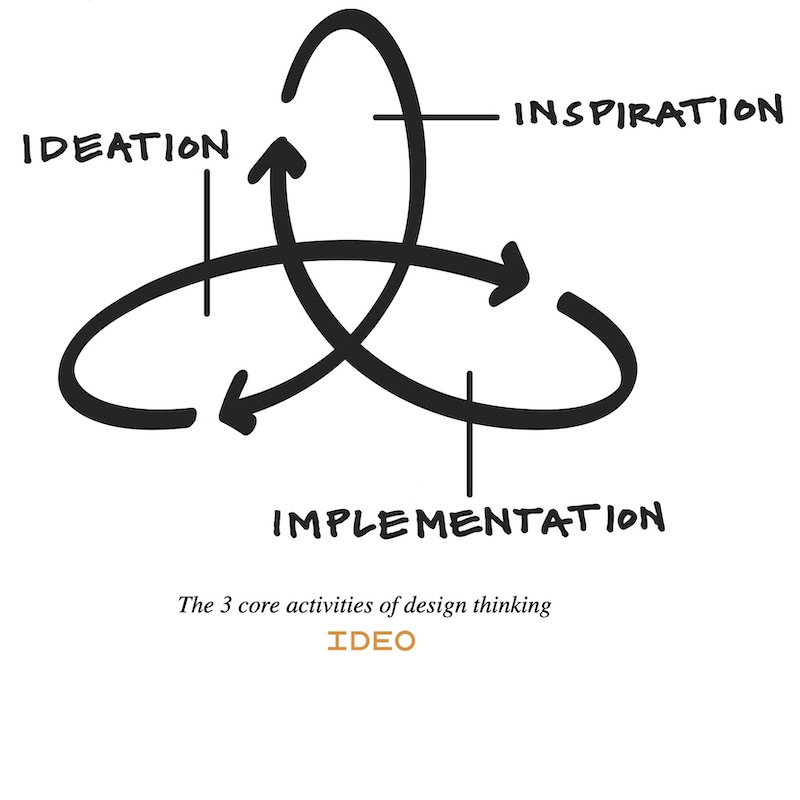
design thinking three spaces

Integrating design thinking into innovation process

Tim recommends an eight-step process:

  1. Involve design thinkers at the very start of the innovation – this will enable more ideas to be explored more quickly
  2. Use a human-centric approach – direct observation can offer unexpected insights and capture more precisely what consumers want
  3. Rapid experimentation and prototyping – measure progress through time to first prototype, number of consumers exposed to prototypes
  4. Co-create with customers and consumers – enlarge the scale of your innovation team
  5. Initiate revolutionary innovation from the top – expect business teams to fund and drive incremental innovation but be prepared to fund more disruptive innovation
  6. Adjust budget to pace of innovation – don’t constrain innovation through cumbersome budgeting cycles
  7. Diversify talent recruitment – interdisciplinary programs train designers that can push beyond expectations.
  8. Experience the full cycle – plan so design thinkers see the project through from inspiration, ideation, and implementation.

Explore design thinking for yourself

IDEO provides free resources including the design kit which provides easy-to-use tools for each for the three spaces.

https://www.designkit.org/methods.html

Tim is also the author of the best seller Change by Design
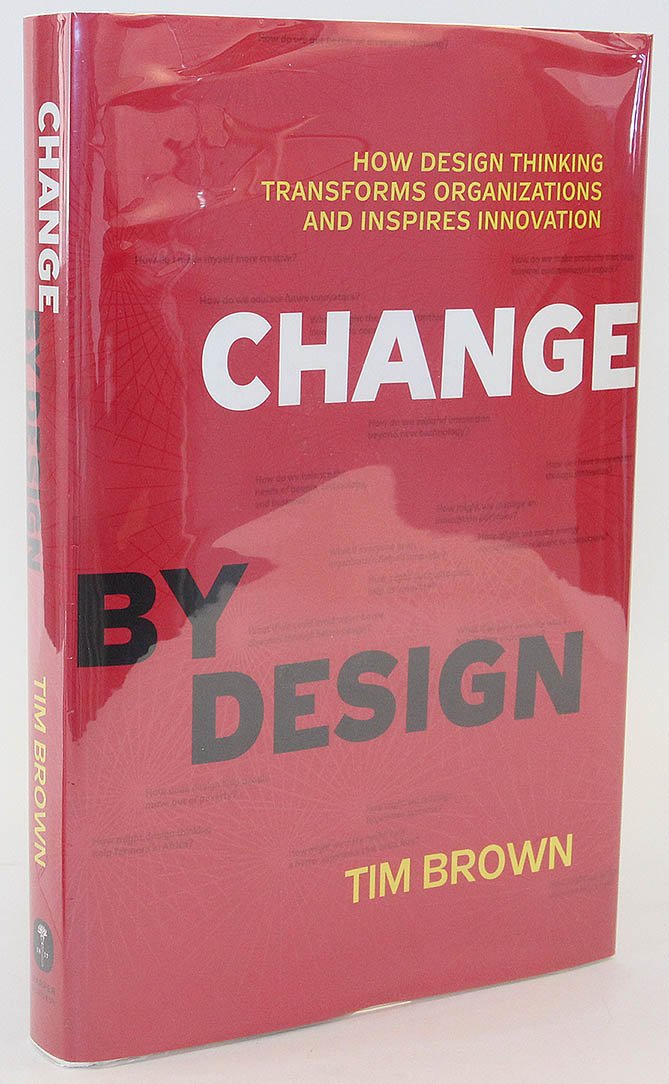
Change by Design Tim Brown design thinking

More posts about Design Thinking

Human-centric design thinking reveals unexpected innovations

Human-centric design thinking reveals unexpected innovations

Tim Brown of IDEO defines design thinking a discipline that uses the designer’s sensibility and methods, to match people’s needs with what is technologically feasible, and what a viable business strategy can convert into customer value and market opportunity. There’s no single definition for design thinking. It’s an idea, a strategy, a method, and a [...]

Read more
Holistic design is challenging as it involves many interconnected elements. This study introduced the concept of a “problem freeze” stage, where design exploration is intentionally limited to enable progress toward production. This is a practical approach for handling high-complexity projects.

Solving complex holistic design problems with search strategies

Holistic design is challenging as it involves many interconnected elements. This study introduced the concept of a “problem freeze” stage, where design exploration is intentionally limited to enable progress toward production. This is a practical approach for handling high-complexity projects.

Read more
PepsiCo's North American Beverages fleet [image credit: Melissa Golden; PepsiCo - from PepsiCo.com]

PepsiCo’s design thinking approach to organizational innovation

PepsiCo transformed its organization by adopting a design thinking approach. Researchers identified nine design thinking practices that could lead to organizational innovation

Read more
Design Thinking

Design thinking to achieve ambidextrous innovation management

Design Thinking can help organisations to become ‘ambidextrous’ (pursue the competing agendas of exploitative innovation and explorative innovation in parallel), but to do both requires a shift in thinking. Researchers studied the journey of a leading Australian property development company in its bid to become ambidextrous.

Read more
Could chatbots be used to elicit customer experience insights?  Karim Sidaoui and colleagues at the Alliance Manchester Business School reviewed how AI could be used to combine the deep insights gained from interviews with the objectivity of quantitative analysis.

AI feel you – capturing the customer experience with chatbots

Could chatbots be used to elicit customer experience insights?  Karim Sidaoui and colleagues at the Alliance Manchester Business School reviewed how AI could be used to combine the deep insights gained from interviews with the objectivity of quantitative analysis.

Read more
  • 30 April 2026
View our newsletter archive
  • Related posts

    • Human-centric design thinking reveals unexpected innovations
    • PepsiCo’s design thinking approach to organizational innovation
    • Innovation by experimentation
    • Design thinking to achieve ambidextrous innovation management
    • Blind faith or hard evidence – does Design Thinking actually work in R&D?
    • The Right Way to Lead Design Thinking – a review
    • Accelerating product development: the tools you need now – a review
    • Reflections on the Milan R&D Management Conference
    • The problem of plastic: Open Innovation Forum tackles sustainable packaging
    • Visualizing Roadmaps: A Design-Driven Approach
    • Identifying hidden needs: creating breakthrough products
  • Have your say

    Have your say / Follow us

    Linkedin Soundcloud Twitter Youtube Linkedin-in

    R&D Today is the outreach site for the Research and Development Management Association, a charitable organisation that supports research, best practice and innovation.  www.radma.net

    Click here to sign up to our newsletter, and
     click here to view our newsletter archive.

    © Copyright R&D Today

    2026.

    All rights reserved.